The Society of Georgia Archivists is now accepting applications for the 2023 Anthony Dees Educational Workshop Scholarship, Larry Gulley Scholarship, and the Taronda Spencer Award. These awards provide funding for individuals to attend the 2023 Annual Meeting of the Society of Georgia Archivists and Pre-Conference Workshop.
Completed applications must be received by August 31, 2023, 11:59 p.m. ET.
This year’s SGA Annual Meeting will take place October 12-13, 2023 at Kennesaw State University with this year’s Pre-Conference Workshop, held virtually preceding the meeting on October 11, 2023.
About the Scholarships:
Anthony Dees Educational Workshop Scholarship – Provides funding to attend the SGA-sponsored Pre-Conference Workshop, “Embodied Memory Mapping,” an Annual Membership to SGA (or 1-year renewal), and a $75 credit to apply to a Society of American Archivists (SAA) class or book purchase in the SAA bookstore
Larry Gulley Scholarship – Provides funding to attend the SGA Annual Meeting, an Annual Membership to SGA (or 1-year renewal), and a $100 credit to apply to a Society of American Archivists (SAA) class or book purchase in the SAA bookstore
Taronda Spencer Award – Provides funding for those currently enrolled as a junior or senior at an HBCU with a demonstrated interest in archives -or- students of African-American, Asian/Pacific-Islander, Latino, or Native American descent to attend the SGA Annual Meeting, an Annual Membership to SGA (or 1-year renewal), and a $150 credit to apply to a Society of American Archivists (SAA) class or book purchase in the SAA bookstore.
Complete applications supplemental materials must be received by August 31, 2023, 11:59 p.m. ET.
Eligibility: Specific requirements are listed on each scholarship award page. Please note that scholarship winners are responsible for submitting their workshop and/or conference registration forms by required deadlines. After the conference, recipients will submit a brief article on their experience for use in the SGA Blog.
As a recipient of the Carroll Hart scholarship from the Society of Georgia Archivists, I was able to attend the Georgia Archives Institute in June of 2023. During this two-week internship, which included daily workshops and a hands-on experience processing a collection and creating a finding aid at Emory University, I gained valuable insight into the archival profession, from the preservation of fragile audio-visual materials to learning more about the newest trends in digitization.
I appreciated the breadth of the topics covered during the Institute, which provided a firm foundation in established professional standards and principles while also speaking to the rapid changes in technology which present both advances and challenges to accessibility. Overall, I also appreciated the chance to meet and converse with other professionals and take home their valuable advice to apply at my own institution.
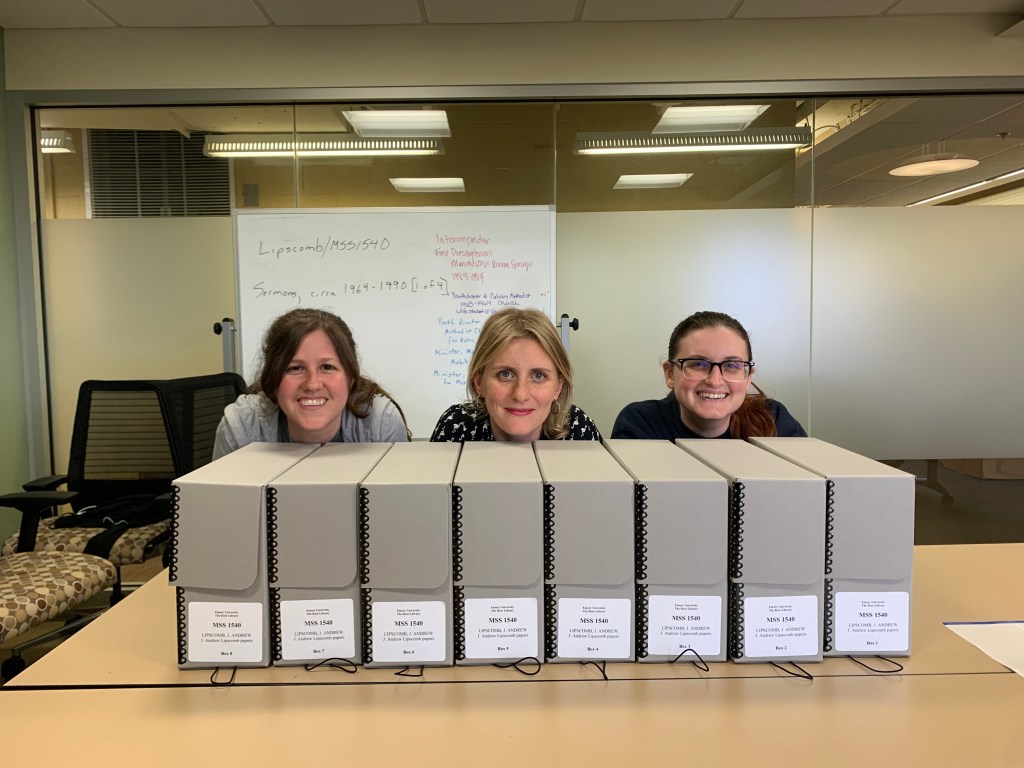
The three-day internship at Emory was the most enlightening aspect of the entire experience at the Institute since we applied the theoretical frameworks from the class sessions to an actual collection in an existing repository. My two fellow interns and I processed the J. Andrew Lipscomb papers and wrote the finding aid which was then uploaded to ArchivesSpace. Since Emory just recently transitioned to ArchivesSpace, this was a unique opportunity to create one of the institution’s first new finding aids on the platform.
We also toured Emory’s preservation lab which was particularly fascinating since I didn’t previously have a strong background in preservation or conservation. After that tour, I was convinced that not enough institutions are putting an emphasis on the importance of the art of preserving and conserving materials.
Thank you to the Society of Georgia Archivists for providing the means to attend the Georgia Archives Institute.
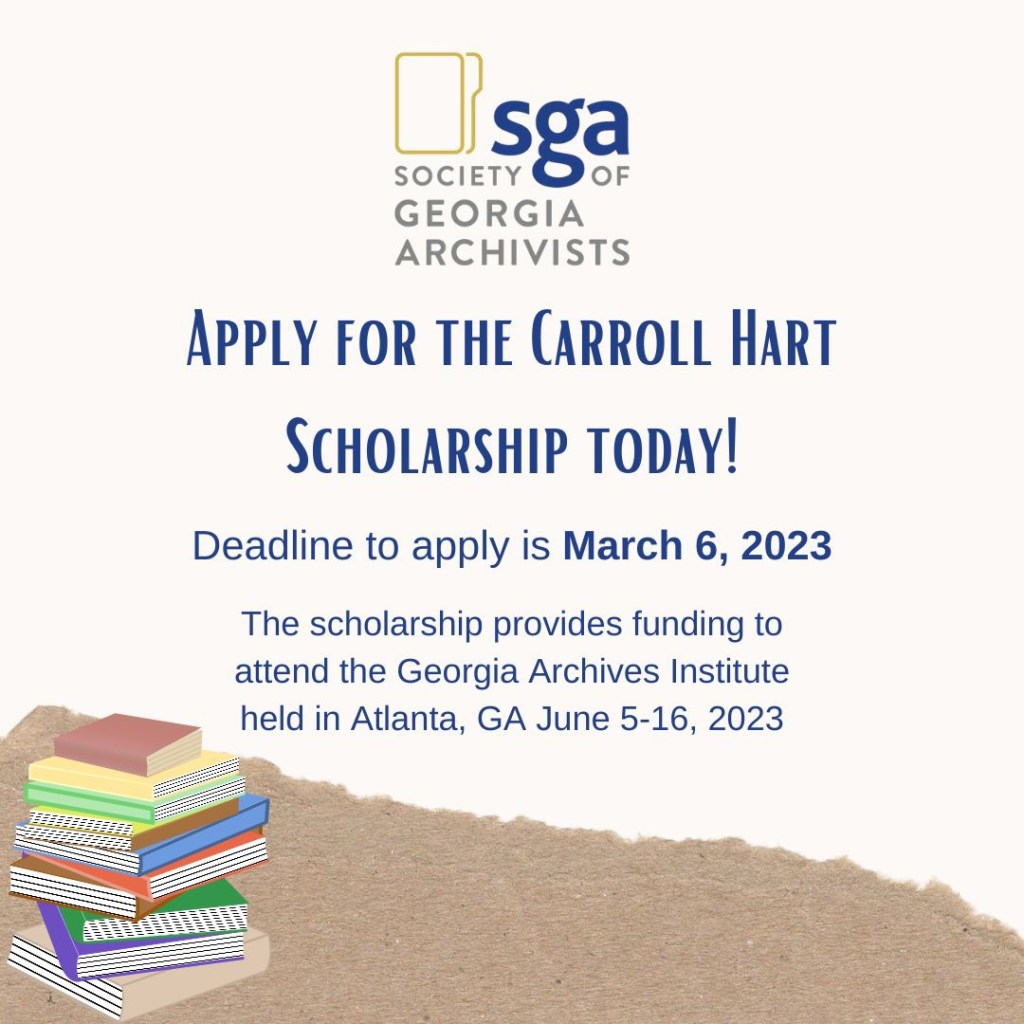
The Society of Georgia Archivists awards a scholarship for attendance at the Georgia Archives Institute held each summer in Atlanta. The purpose of the scholarship is to enhance archival education and membership. The scholarship is named for Carroll Hart, former director of the Georgia Department of Archives and History, founding member of the Society of Georgia Archivists, and founder of the Georgia Archives Institute.
Individuals eligible to compete for the scholarship are:
Those engaged in compensated or volunteer archival work at any level in an institution in the state of Georgia.
SGA members employed outside the state of Georgia.
Graduate students preparing for a career in archives at a college or university in Georgia, or SGA student members studying outside the state of Georgia.
Preference will be given to applicants who do not have access to institutional support for attending the Georgia Archives Institute.
The scholarship will cover an amount equal to the non credit tuition for the Institute, but not to exceed $500, and a year’s membership in the Society of Georgia Archivists. Please note that individuals must apply separately to the Georgia Archives Institute and pay the application fee to the Georgia Archives Institute. All regular deadlines and requirements for the Georgia Archives Institute apply. After participating in the Georgia Archives Institute, the recipient will submit a brief article on the experience for use in the SGA Newsletter.
June 5-16, 2023 is the date for the 2023 Georgia Archives Institute. The Institute will be held at the Georgia Archives, located in Morrow, GA, just outside Atlanta. Classroom instruction will take place the first week, June 5 through June 9 and also on Monday, June 12. Tuesday, Wednesday and Thursday June 13-15 will be an on-site internship at a local institution, where you can ask all the questions you want and put your classroom instruction to good use. Friday, June 16 will be a wrap-up day, held back at the Georgia Archives.
Pam Hackbart-Dean, Head and Professor, Special Collections & University Archives, Interim Associate University Librarian, University of Illinois Chicago Libraries, will serve as primary instructor. Preservation of Archival Materials will be taught by Tina Seetoo, Preservation Manager at Delta Flight Museum. Born-Digital and Digital Preservation will be taught by Katherine Fisher, Head of Digital Archives, Stuart A. Rose Manuscript, Archives, & Rare Book Library, Emory University.
Tuition is $500 and enrollment is limited to 20 students. The application will go live on January 1, 2023 with a deadline of midnight on March 15. There is an application fee of $75, but if your application is not successful, your fee will be refunded.
Currently, there are also four scholarships that fit your situation and aid your ability to attend the Institute. You can find links and more information here: https://www.georgiaarchivesinstitute.org/support
Submitted by Autumn Johnson, Special Collections Librarian, Georgia Southern University
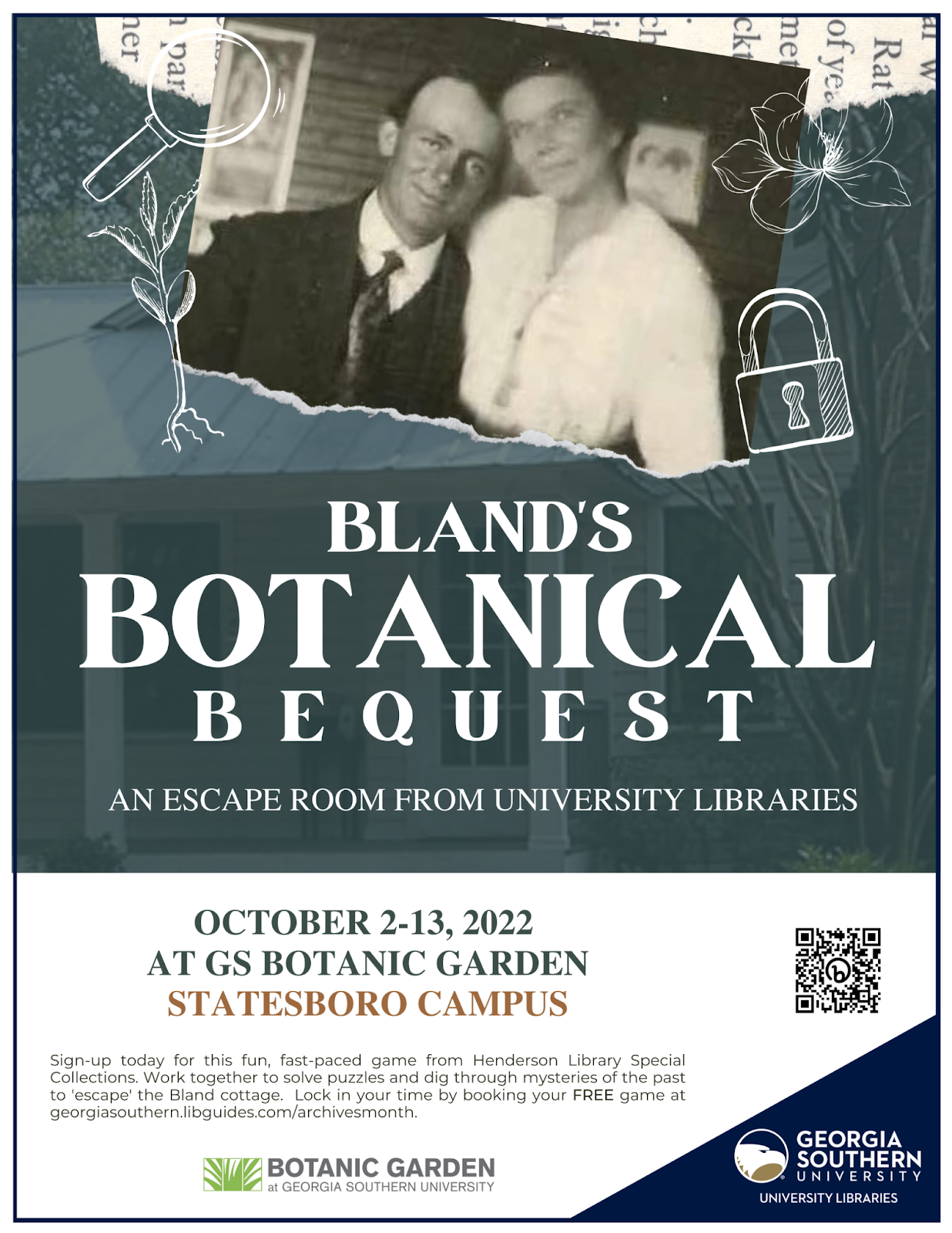
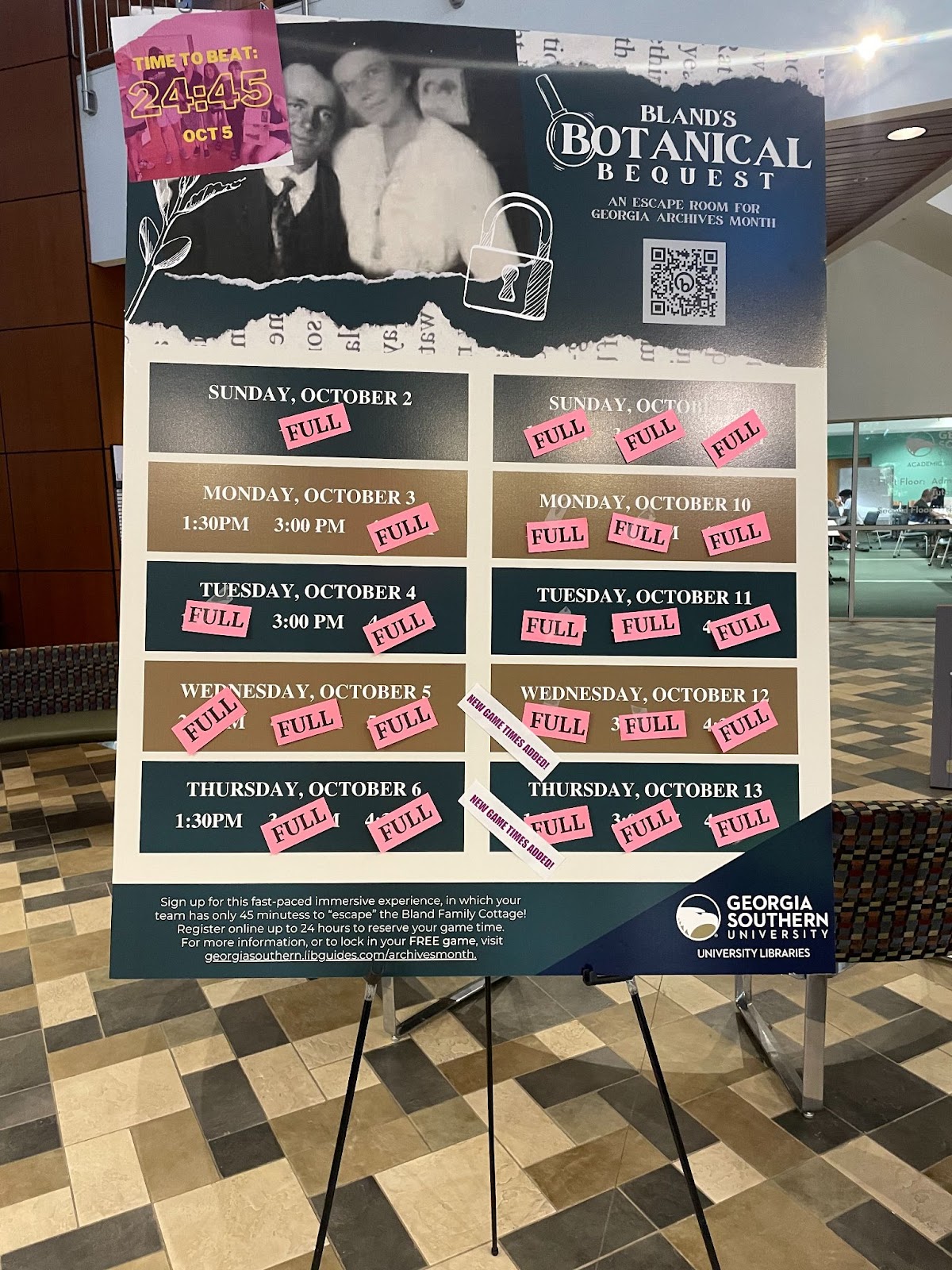
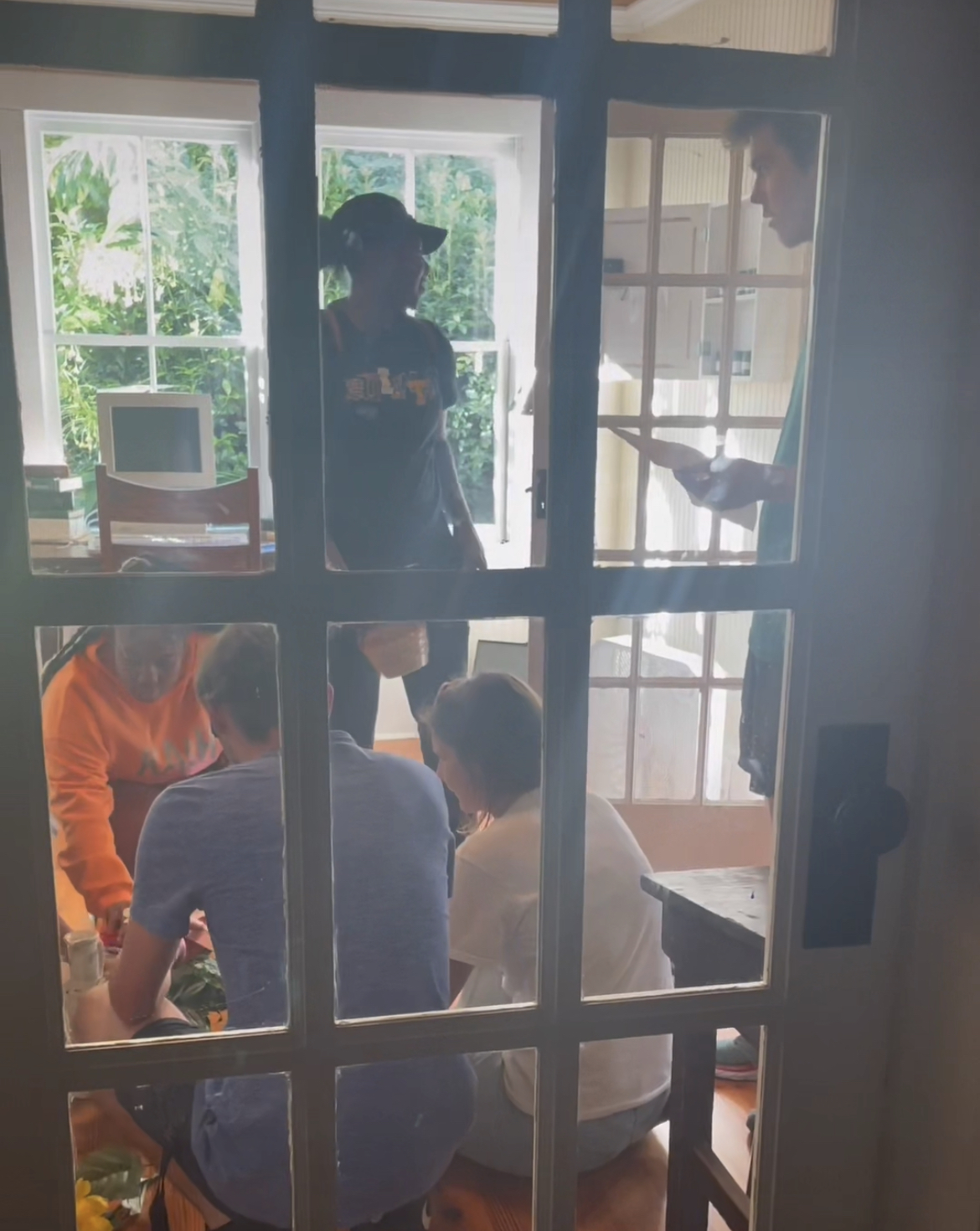
Georgia Southern University’s Special Collections recently wrapped up their Georgia Archives Month program, Bland’s Botanical Bequest: An Escape Game for Georgia Archives. This was the third and most successful game-based instructional program the unit has organized over the past few years that highlights the unique resources offered on their campus. The program builds upon the success of their 2019 Secrets, Sources, and Swamp face-to-face escape room and 2021 semi-virtual Case of the College Sweetheart mystery experience. This year, Special Collections took the escape game concept outside of the library and partnered with Georgia Southern’s Botanic Gardens. The program was held in the Botanic Gardens’ historic Bland Cottage, the 1920s homestead of Daniel and Catherine Bland, who donated the cottage and land to the University in the 1980s.
The game, similar to commercially available escape games, placed players together in a situational enviroment where they must solve a series puzzles and clues in order to solve the task at hand. Specifically, players in this game were given 45-minutes to find the Last Will & Testament of Daniel “Dan” Bland, who upon his passing in 1985, bequeathed his estate to the University.
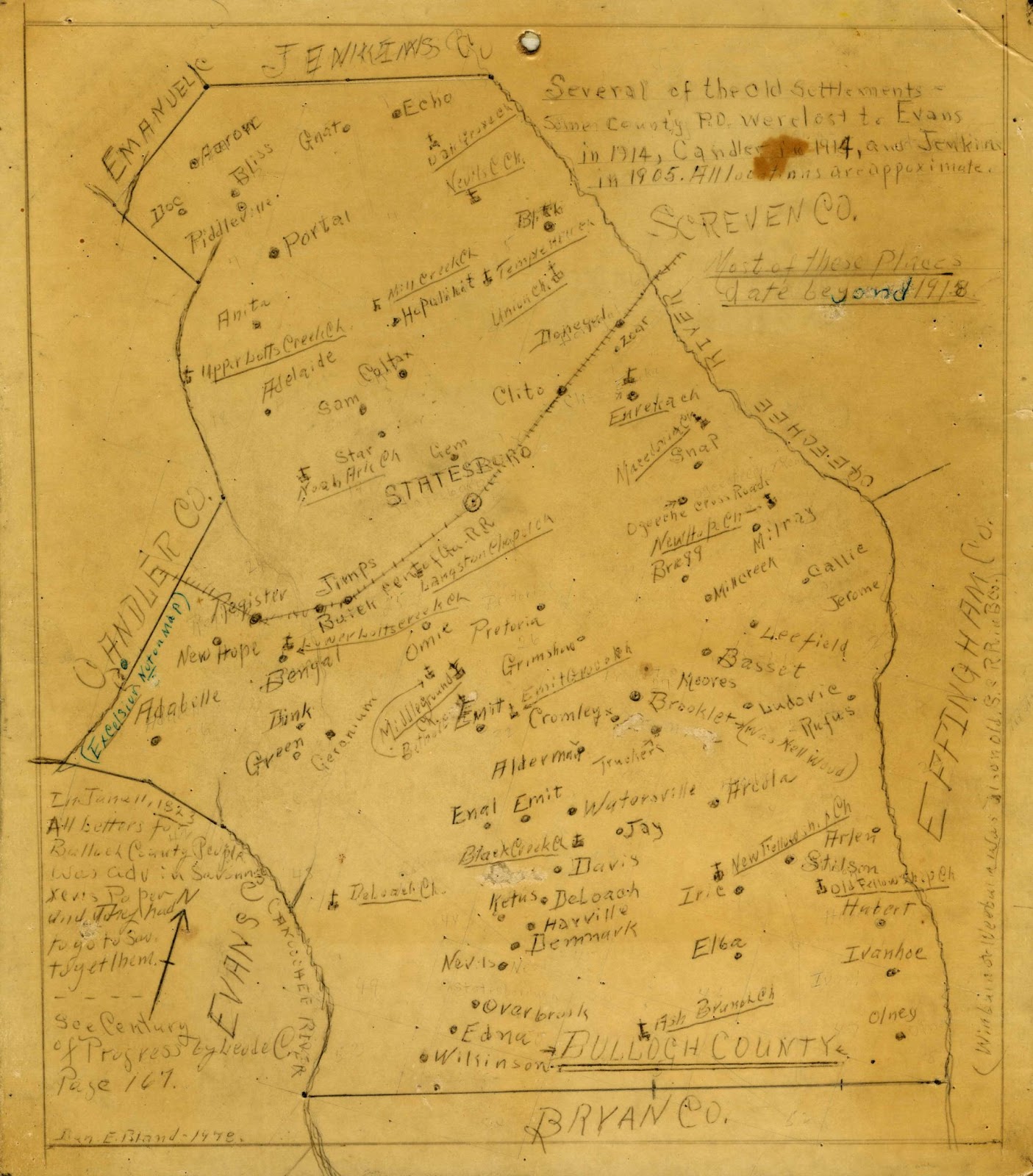
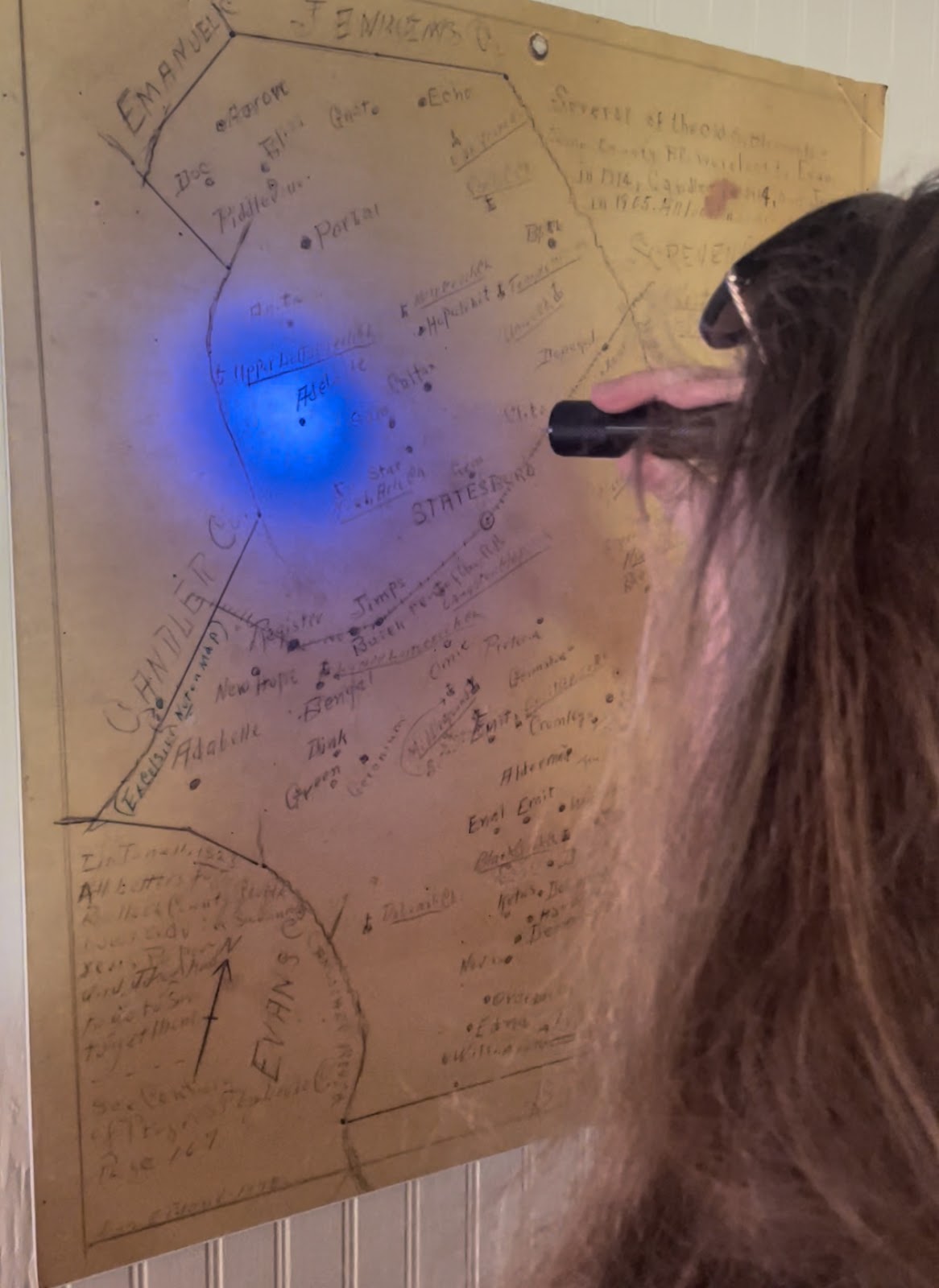
The Bland cottage was transformed back into the 1980s and reflected the wide interests and hobbies of the Bland family. Many of the clues and puzzles encountered throughout the game were based on actual materials belonging to Dan and Catherine Bland including photographs, a hand-drawn map, herbarium press book, historic newspaper articles, and even an oral history recording. Many of these were rediscovered in Special Collections when Gardens staff began to conduct research for an upcoming exhibition!
By encountering these first-hand accounts and original materials from Special Collections, our players were able to piece together the lives of Dan and Catherine Bland, two citizen scientists who contributed greatly to Georgia Southern and the local community. They discovered the Bland family and their vision to inspire generations of lifelong learner through community gardens while learning more about the breadth and depth of resources available to them from Special Collections.
This program was the most successful to date with over 230 participants during the short-run. The program was made available through generous funding from the 2022 Georgia Archives Month Spotlight on Archives Grant. There will be an encore run of the program in Spring 2023 based on unprecedented demand from both University and greater communities!
Hello! My name is Camilla Stegall. I am honored to be the 2022 recipient of the Carroll Hart Scholarship to attend the Georgia Archives Institute.
First, a little about myself. I am 2022 graduate from Kennesaw State University (KSU). I was encouraged by Dr. Jennifer Dickey, the Public History Coordinator at KSU, to apply for the Institute. During my time at KSU, I developed strong relationships with the archivists and had heard about the Society of Georgia Archivists. (It was through them that I learned about SGA and applied for and presented in the Student Research Showcase at the SGA 2021 Virtual Annual Meeting.) I am thankful for the opportunity to attend the Institute as I go on to attend the MSLIS online Leep program at the University of Illinois Urbana-Champaign in the fall.
Now to the Institute. The first six days were filled with instruction on foundational archival concepts, including appraisal, arrangement and description, preservation (physical and digital!), reference, copyright, and outreach. Everything that you need to “identify, preserve, and make available” archival materials. Pam Hackbart-Dean, Tina Mason Seetoo, and Katherine Fisher were wonderful primary instructors whose years of experience are evident in their instruction—from their lectures to their class activities to get us thinking about how we would approach challenges and daily tasks in archives.
As mentioned, the lectures were interlaced with group activities and case studies. This was fantastic for me as I am a “hands-on learner!” In these groups, I also learned from my peers. The twenty of us in the cohort came from a variety of backgrounds and locations. I met a community archivist and a university archivist both from California, an English professor from Alabama, a library associate from Missouri, and an archives volunteer from Atlanta along with several fellow early career archivists from Metro Atlanta. The opportunity to visit and work on assignments with members of my cohort with such a wide array of knowledge and experience was fascinating and eye-opening into how different institutions and individuals approach their work.
Additionally, we listened to guest speakers about topics on archival projects and organizations. The guest speakers for 2022 were Tamika Strong of the Georgia Archives about her work creating a community archives of African American funeral programs, Morna Gerrard of Georgia State University (GSU) about GSU’s Women’s / Gender & Sexuality Collections and projects, SGA President Cathy Miller about SGA and the benefits of it and similar organizations, and Joshua Kitchens about Clayton State University’s Master of Archival Studies program and The Academy of Certified Archivists and how to take part in them. These guest speakers contributed to the Institute by showing us poignant examples of individual and institutional projects that benefit communities by preserving and telling their stories. The overview of the archival organizations and professional development on the last day was a great way to end by providing us possible “next steps” as GAI alumni.
2022 was the first time the Institute has been in-person since the pandemic began. As such, we had several educational excursions during our two weeks. The cohort toured the Georgia Archives and learned about its history; on another day we visited the Georgia Archives Conservation Lab, where we met the conservators and watched demonstrations; and, we also toured the GSU Special Collections and Archives before we attended the GAI Reception. At the reception, we had a lovely evening as we mingled with the GAI Board, our internship supervisors, and amongst ourselves.
Week 2 centered on our three-day internships at sites around Metro Atlanta. I, along with two other attendees, interned at the Stuart A. Rose Manuscript, Archives, and Rare Book Library at Emory University. Our supervisor was Laura Starratt, the Senior Collections Archivist. For our project, we worked with one of Emory’s star collections, the David R. Scott and Anne Lurton Scott papers. David Scott is a retired astronaut and the seventh man to walk on the moon. The collection consisted of materials relating to Scott’s missions and Anne Lurton Scott’s experience as an “astronaut wife.” We processed the printed materials, correspondence, and photographs in the collection (all the while geeking out about NASA). The three of us are honored to have worked on this collection and to make it more accessible to students and researchers. Additionally, during our time at Emory, we toured their conservation lab and archives. We also met with many members of the archives staff and learned about what they do. As I am exploring what facet of archives I want to pursue, I appreciate the time that they spent with us.
Overall, I am grateful for the amazing learning experience that I had during my two weeks at the Georgia Archives Institute. It provided me with a firm foundation of knowledge and insight into the field of archives as I take my next steps to becoming a full-fledged “Georgia Archivist!” Thank you for your support in this endeavor!
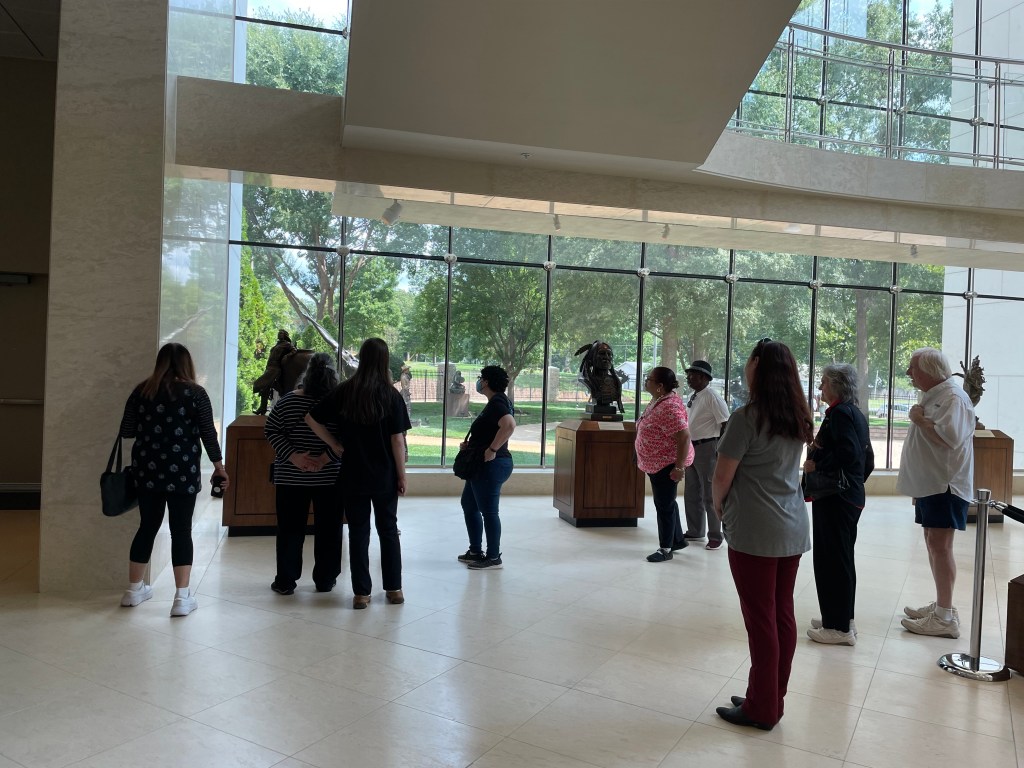
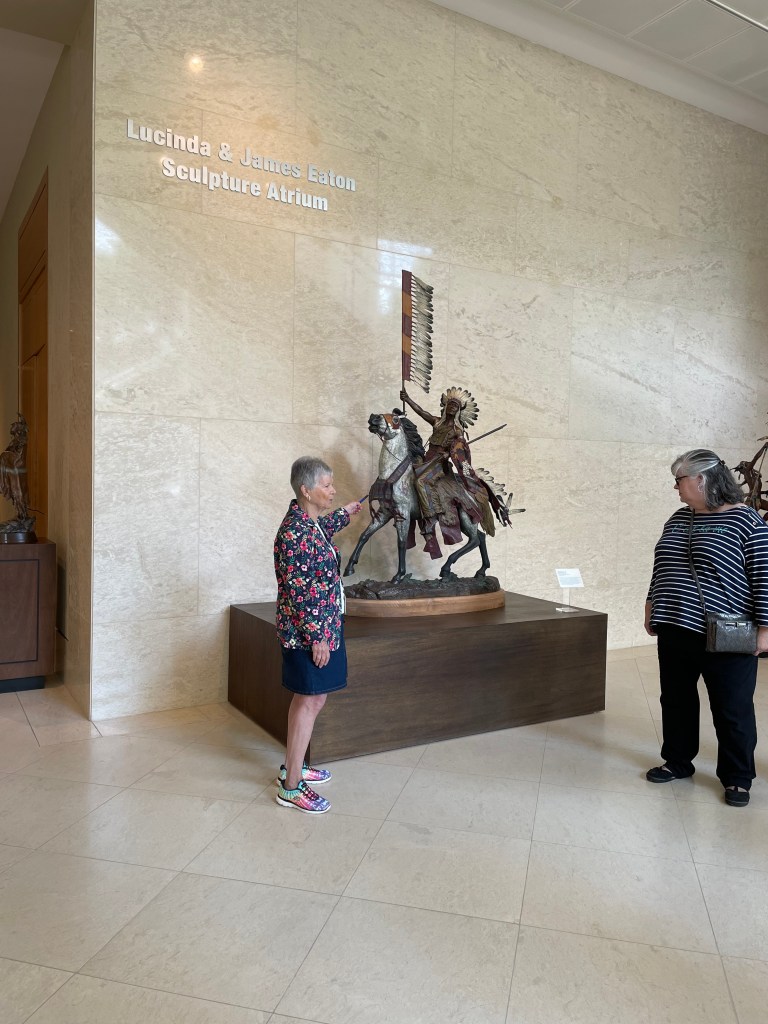
We had a good turnout for our SGA membership outing in August. The Booth Western Art Museum and the Bartow History Museum hosted some wonderful tours to 11 of our members.
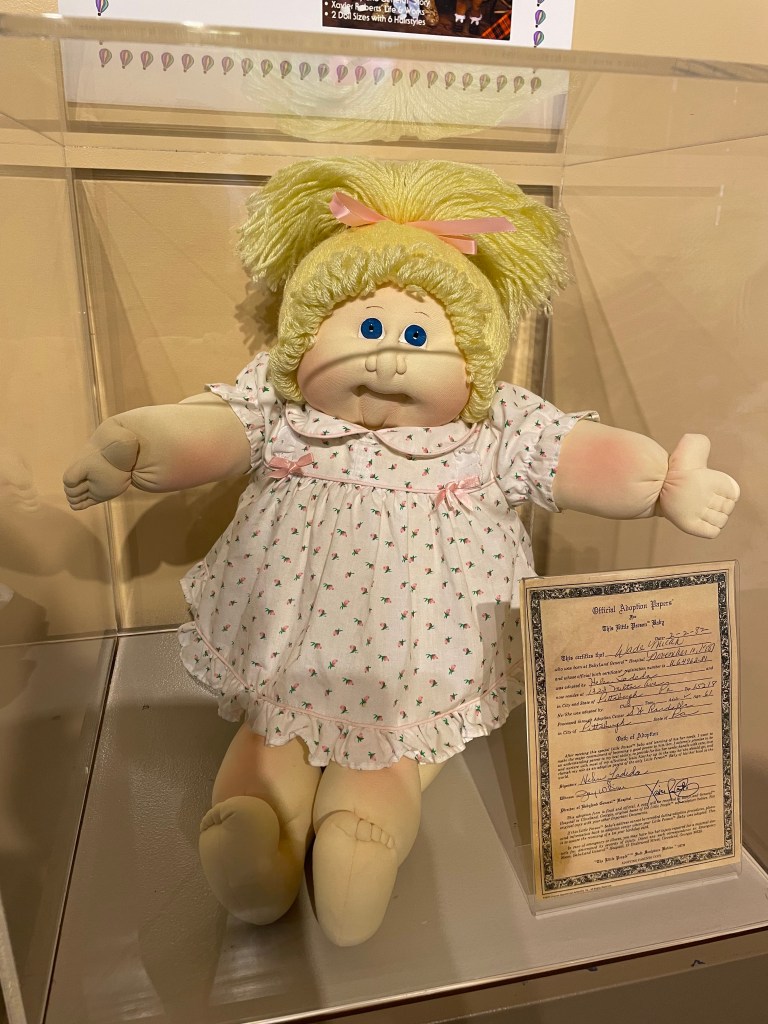
The first tour included a behind the scenes look into the Bartow History Archives, recently named for the Mulinix Family of Bartow County. Our guide, Trey Gaines, then took us over to the Bartow History Museum and discussed the history of the building. The group had time to explore the temporary exhibit of It’s All Fun & Games: Iconic Toys of the Past and the permanent collection on the upper floor.
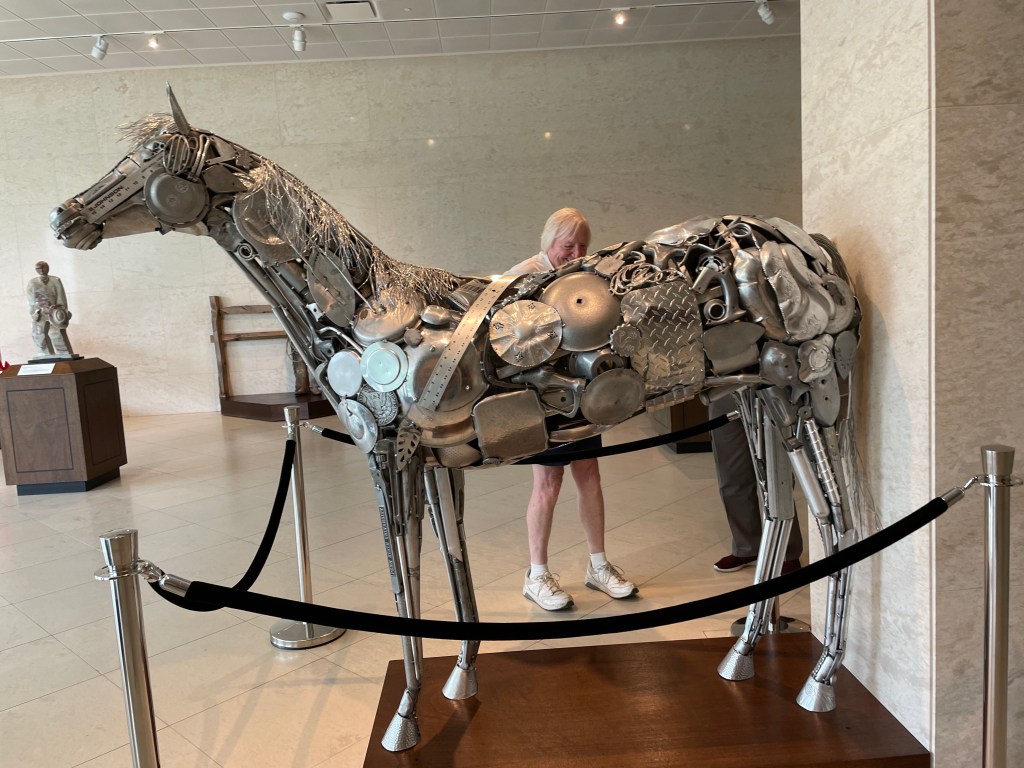
A docent led highlights tour at the Booth Western Art Museum covered many of the museum’s permanent and loaned collection. Pat, a long time docent at the Booth, led a great tour full of interesting history and facts about art and artists housed at the Booth. A horse created from recycled materials, “Walking Horse” by Leo Sewell, was a great talking piece among the group! The piece is created from repurposed metals.
Walking Horse by Leo Sewell
After the docent tour, Marion Hudson, gave the group a look at the Booth Research Library. Marion has been the librarian/archivist for the Booth since 2020. Many of the SGA members enjoyed lunch in the Booth Café with its wonderful view of the Bartow History Museum, which is housed in the historical courthouse.
We thank the Booth Western Art Museum and the Bartow History Museum for their hospitality. For more information on the Booth Western Art Museum and the Bartow History Museum visit the websites below. Both are sister museums to the Tellus Science Museum and Savoy Automobile Museum; all are part of Georgia Museums, Inc.
Submitted by Leigh Burns, Director Fox Theatre Institute
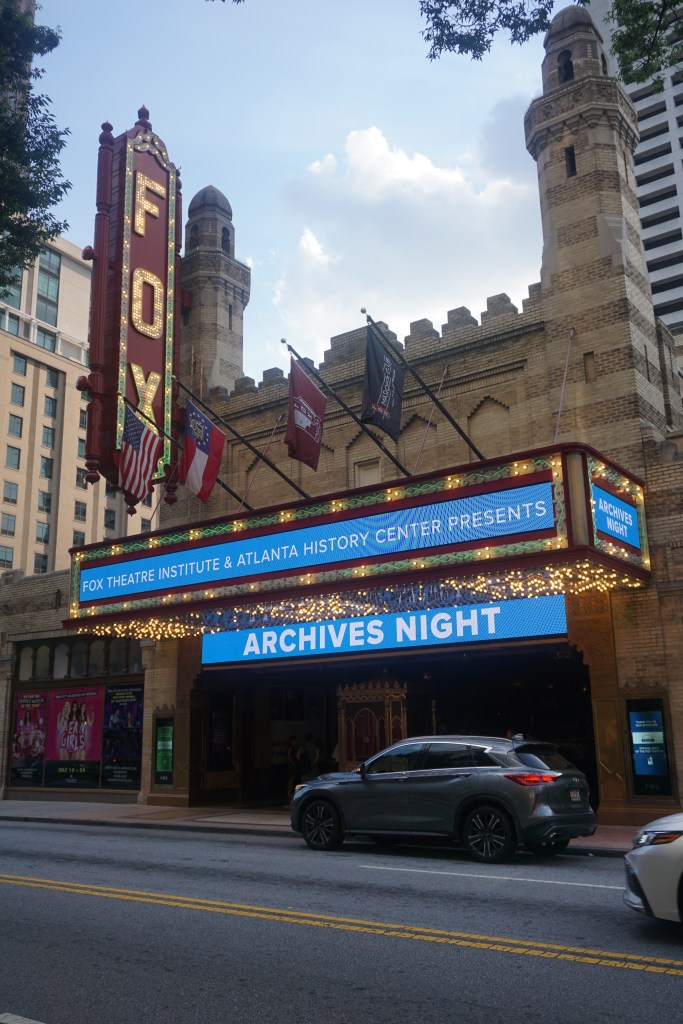
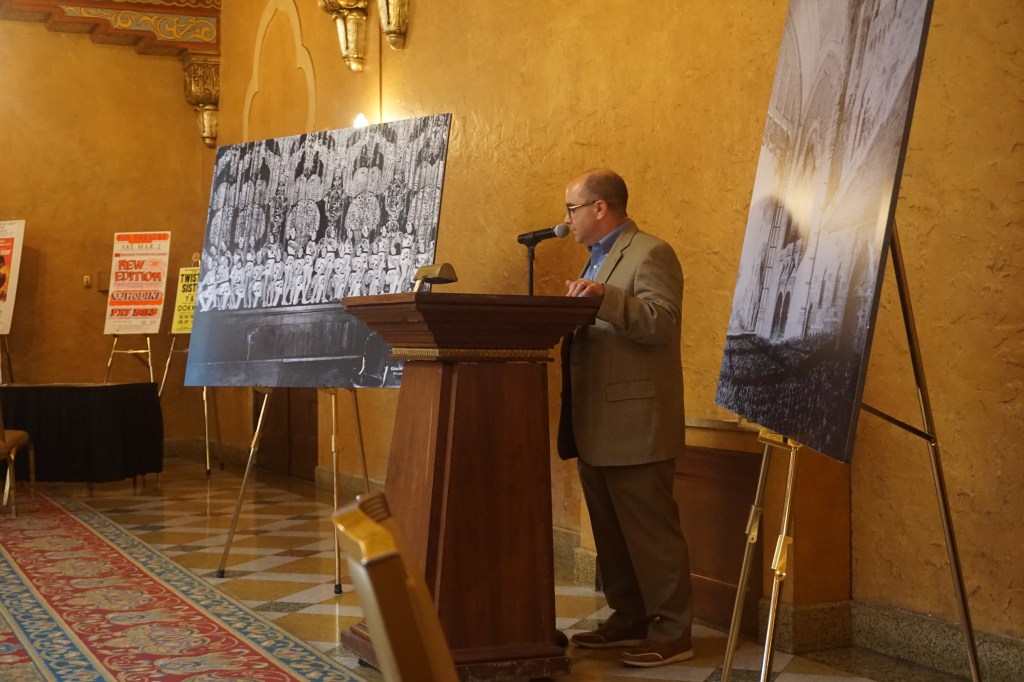
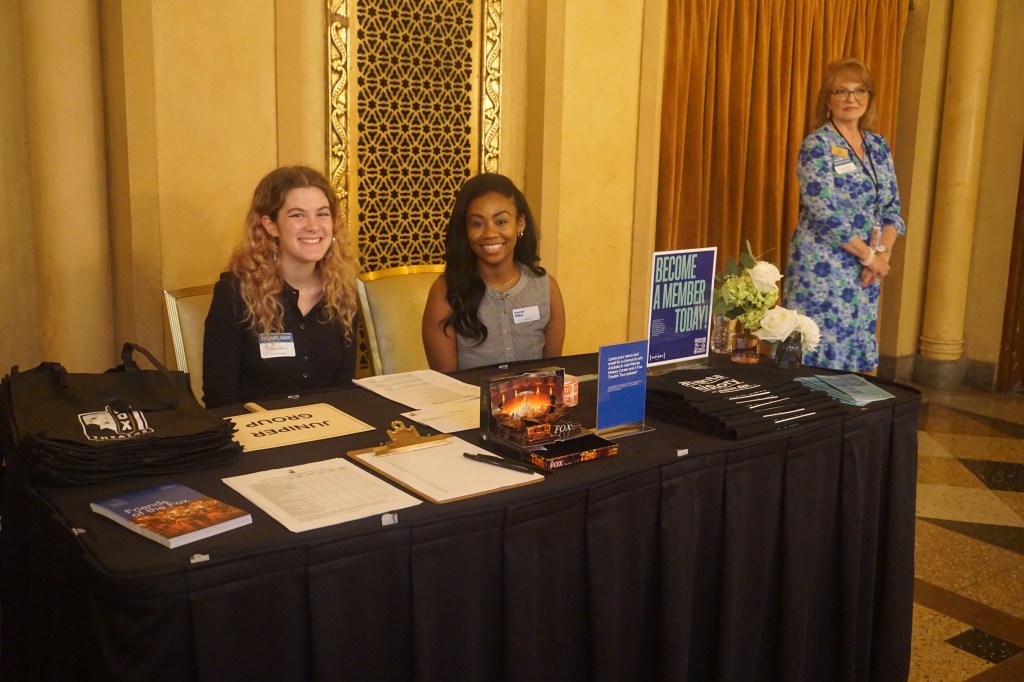
The Fox Theatre, in partnership with Atlanta History Center (AHC), hosted our first Archives Night here at the Fox Theatre on Thursday, June 16th. The evening was planned originally for 2020, then later revived in 2022, with the support of our colleagues at AHC. We had more than one hundred attend the event with members from both AHC and our Friends of the Fox. We were thrilled by the enthusiasm for the event and the attendance exceeded our expectations.
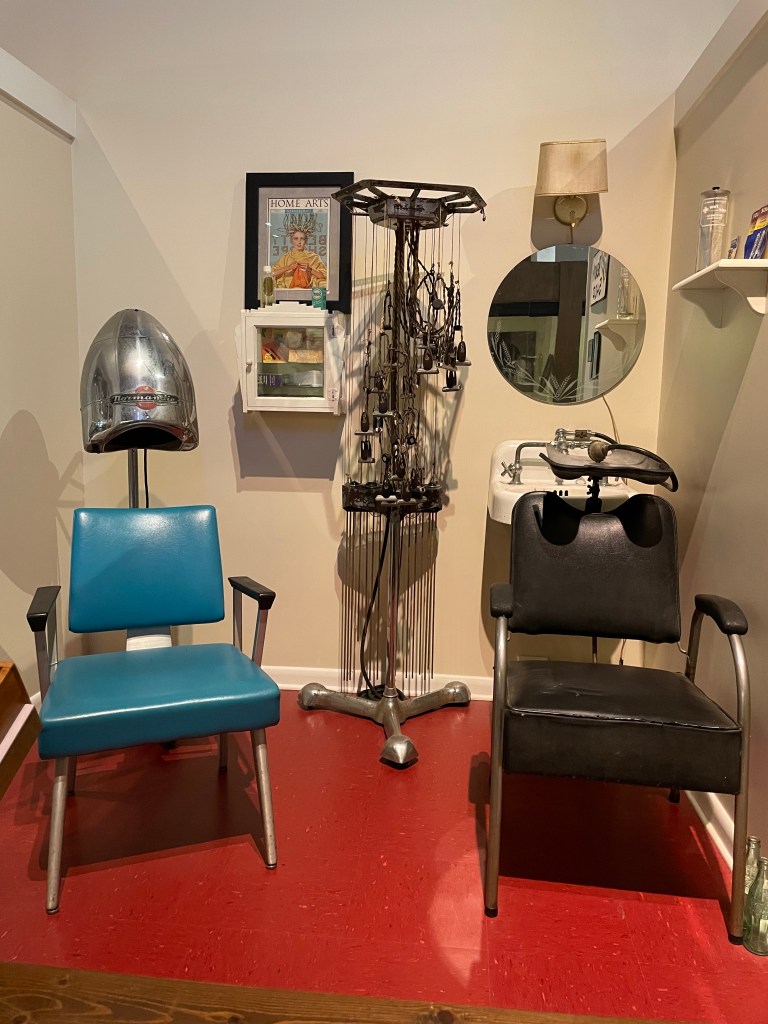
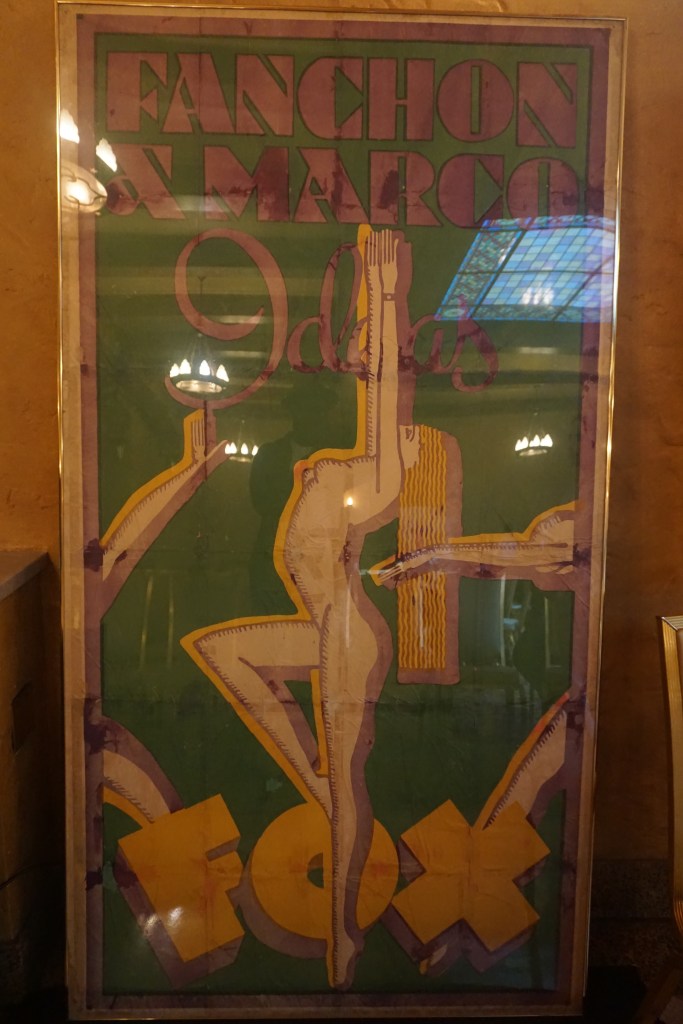
Beyond collaborating with AHC staff on the event, we also enjoyed hosting many of their devoted members here to discover our own Fox Theatre archival collections. The special event gave our guests an opportunity to discover firsthand dozens of artifacts, many for the first time, from the Fox’s archives by rotating presentations from three archival experts. Our experts included Paul Crater, Debra Freer, and Josh Kitchens. These individuals have worked in our archives in different capacities throughout the years and have exceptional archival experience. In their individual, rotating presentations, each highlighted some the Fox’s original furniture, lighting, artwork, movie and show posters, and our 1970s Save the Fox campaign memorabilia. Before the rotating presentations began, Paul Crater gave an informative and enjoyable opening address. Paul’s personal interest in our own collections and his devotion to preserving Atlanta history is admirable. We are so grateful that Paul helped us lead this first-time effort. Well beyond that evening, Paul continues to support all our archives through consulting as needed.
The Fox Theatre Archives is located onsite here at the Fox Theatre. Our archives space was formally integrated into the Restoration department of the Fox Theatre in 1996. Following the 1996 fire that began in the adjoining restaurant, our Fox Theatre leadership established a permanent, climate-controlled designated area for our irreplaceable items. The archives were built out of a previous administrative area and established to protect the various artifacts important to legacy of the theatre. Beyond thousands of paper artifacts, our collections within our “living museum” includes historic furniture, historic lighting, our Moller “Mighty Mo” organ, and other artwork including architectural features. The Fox Theatre funds the ongoing care of the collections through a restoration fee added to all ticketed, public events. Every time one of our patrons join us at the Fox, they are contributing financially to the care of our collections, including our Fox Theatre archives. In addition to the physical objects, we maintain our collection electronically through the Access to Memory database. The database was implemented in 2018 and we use this to assist with external and internal requests from the public and staff as needed. We maintain architectural drawings, historical photographs and other historical documents that support the work of our marketing and facilities and restoration team members.
We look forward to hosting additional public events relating to our Archives and we hope potentially another Archives Night in early 2023. We are grateful for the support of many archivists from the metro-Atlanta area for attending this first special event. For more information about the history of the Fox Theatre please feel free to visit our website at https://www.foxtheatre.org/about/fox-historystory
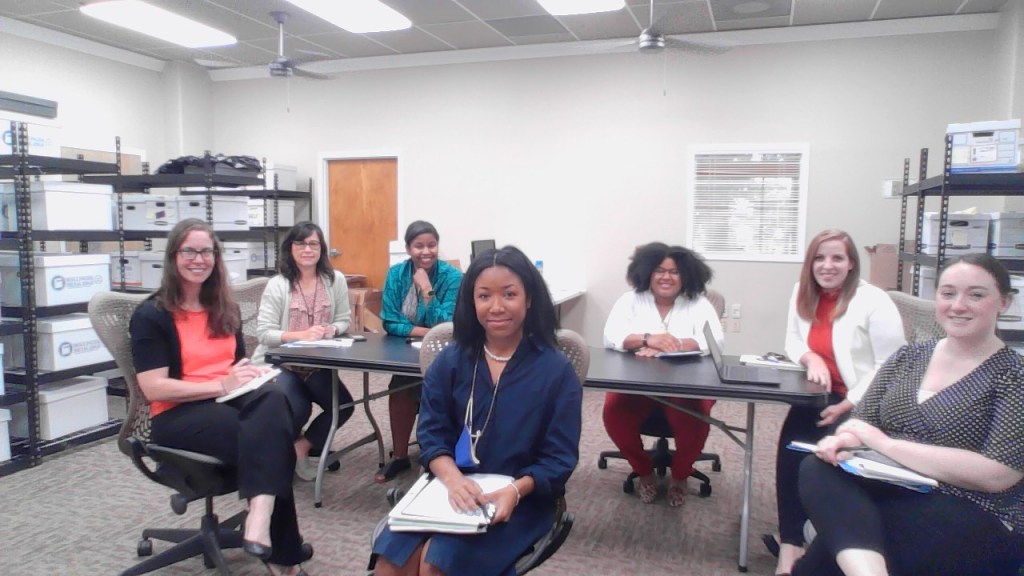
By Lowery Project Team Members Amber L. Moore (Project Archivist) and Cathy Miller (Digitization Project Manager), Atlanta University Center’s Woodruff Library
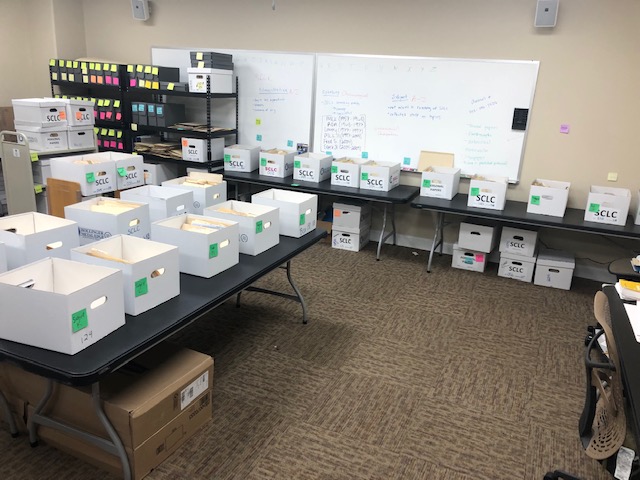
In May 2021, the family of late civil rights icons Joseph and Evelyn Lowery have gifted a priceless collection of official and personal papers, photographs, writings, speeches, audio and video recordings, and other mementos to Morehouse College. The Joseph Echols and Evelyn Gibson Lowery Collection includes over 400 linear feet of invaluable materials chronicling the Lowerys’ work with civil and human rights leaders.
Over the next several months, grant funded project archivists and archival assistants will provide expert care to organize, describe, and digitize the collection to ensure broad accessibility – both physically and digitally. The Joseph Echols and Evelyn Gibson Lowery Collection expands the body of primary-sourced materials available for teaching, learning and research in the Atlanta University Center and to scholars around the globe.
Rev. Dr. Joseph Lowery, called the “dean of the civil rights movement,” helped create the Southern Christian Leadership Conference (SCLC) and served as founding vice president alongside founding president Dr. Martin Luther King, Jr. He later served as SCLC chairman and as president and CEO. During the historic Selma to Montgomery March for voting rights in Alabama, which commenced with the violent beating of nonviolent marchers on what came to be known as “Bloody Sunday,” Lowery led the delegation delivering a list of demands to segregationist former Alabama Governor George Wallace. His peaceful activism for justice resulted in numerous arrests and having his property seized by the state of Alabama in a historic libel suit, which resulted in a vindication by the U.S. Supreme Court and a precedent protecting the free speech rights of the press and citizen advocates.
Evelyn Gibson Lowery was a civil rights pioneer and change agent. She established SCLC/ W.O.M.E.N. (Women’s Organizational Movement for Equality Now, Inc.), which instituted programs on global issues including HIV/AIDS, computer and GED education for women, mentoring for girls, and civil rights history. She created 13 monuments honoring civil rights heroes while also creating a civil rights heritage tour. She graduated from Clark College, now Clark Atlanta University.
The Joseph Echols and Evelyn Gibson Lowery Collection will be archived and curated at the Atlanta University Center (AUC) Robert W. Woodruff Library and used to provide scholars, researchers, students, and the general public with an authentic understanding of the impact, sacrifice, and legacy of these civil rights pioneers. Select audiovisual and textual materials are in the process of being digitized from the collection and made available through the AUC Robert W. Woodruff Library’s online repository, RADAR. Currently, the digital collection contains a mix of videos documenting activities of the SCLC and SCLC/W.O.M.E.N., photographs, and full text searchable versions of SCLC Magazine, the national magazine of the Southern Christian Leadership Conference. The digitized assets from The Joseph Echols and Evelyn Gibson Lowery Collection can be explored here.
This will be the first in a series of posts here to the SGA blog where the Lowery Collection team will be sharing information about our processes and stories discovered from the collections during the work of processing and digitization. We hope you will be as excited to read these posts as we are to share the information with you.
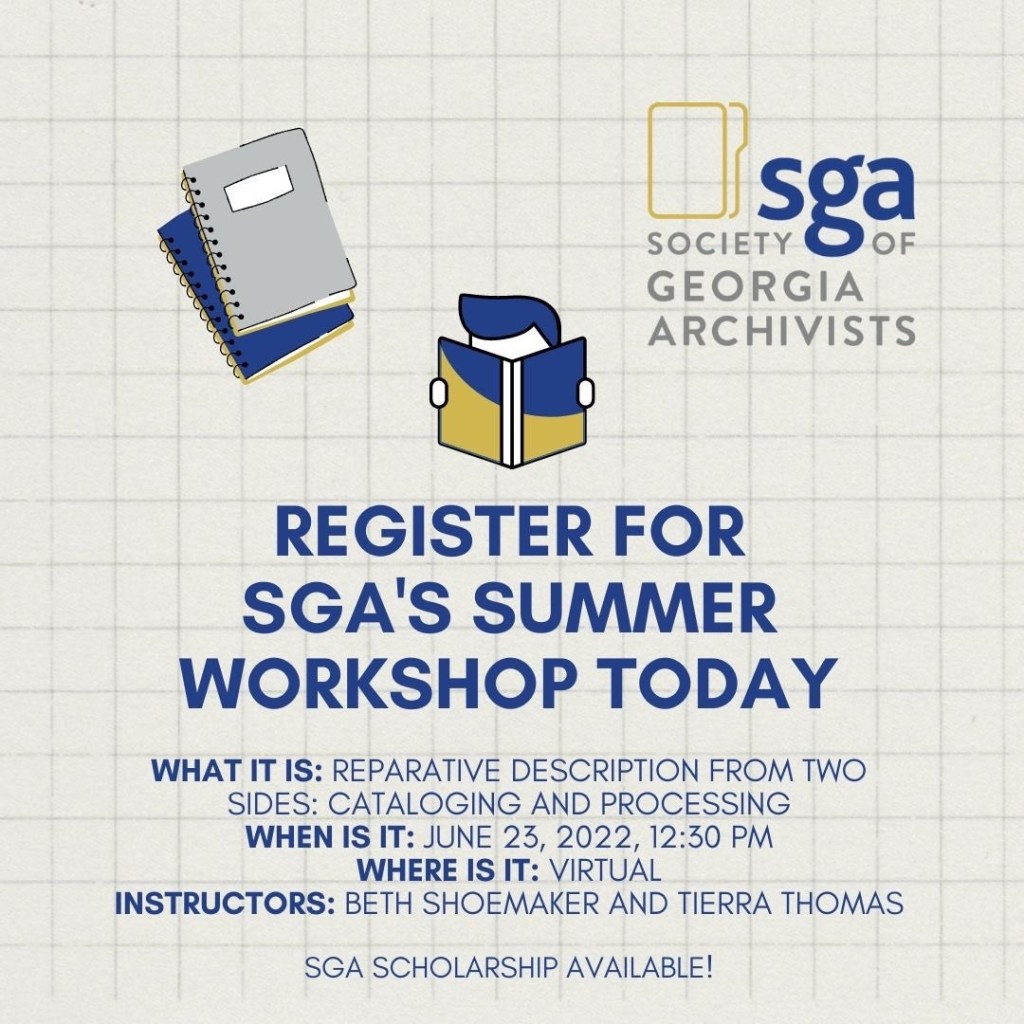
Reparative Description from Two Sides: Cataloging and Processing
Thursday, June 23, 2022, 12:30-4:00 PM (EST)
Location: Zoom
This workshop is for archivists and special collection librarians who wish to increase their abilities in limiting harmful language in their organization’s finding aids and catalog records through reparative description. This workshop will help archivists and librarians to identify and build upon best practices in description and cataloging to create policy, guidelines, and implement reparative description in their own organizations. Discussion leaders will present on prominent topics and issues, and participants will learn how to approach description, identify authoritative organizations and documentation, and discuss situations with leaders in this work as well other learners through the roundtable discussion.
Instructors: Beth Shoemaker and Tierra Thomas
Moderator: Laura Starratt
Beth Shoemaker is the Rare Book Librarian at Emory University’s Stuart A. Rose Manuscript, Archive & Rare Book Library in Atlanta. Her work includes cataloging, collection development, teaching and curating exhibits in the Emory Libraries. Her research interests include how practicing catalogers approach ethics in the workplace. Since its formation in 2018, she has been co-chair of the Cataloging Ethics Steering Committee, which released a final draft of the Cataloguing Code of Ethics in January 2021. Beth is a graduate of the University of Illinois Graduate School of Library and Information Science.
Tierra Thomas is an early career archivist living in Decatur, Georgia. She earned her MSLS at the University of North Carolina at Chapel Hill – School of Information and Library Science. As an undergraduate, she studied History and African American Studies at Georgia State University. Most recently she finished her contract term as Visiting Archivist for Southern Jewish Collections at Emory University. She has served as a member of the Anti-Oppressive Language Working Group at Emory University’s Rose Library and the Conscious Editing Steering Committee at UNC-CH’s Wilson Library. Her research focuses on social justice and equity and centering those ideals in an archival setting.


 sogablog.org