5 Questions for…Elizabeth Yakel

As many of you know by now, Dr. Elizabeth Yakel, Associate Professor of the University of Michigan’s School of Information, will be joining us in Savannah in November to present on the topic of Archival Metrics. She has kindly agreed to answer the following questions for inclusion in our outreach efforts. In addition to the following questions, you can find out more about Dr. Yakel’s teaching, research, and publications at her personal web page.

Five Questions…

How did you become an archivist?

I was an undergraduate at Brown University and thinking about going to library school but the fit was not quite right. Then, I got an internship at the John Hay Library and found my career. Working with the manuscripts there really combined my interest in libraries and organization with really great content. The first collection I processed was the Sarah Helen Whitman collection. She was a transcendentalist and prominent in the Providence social scene, having a role in the Athenaeum. But, her main claim to fame was that she was a fiancé of Edgar Allen Poe before she or perhaps her family made her break it off (who knows!).

What’s changed the most since you became an archivist?

Everything! There are two areas where I have seen the greatest change. Obviously, technology, particularly around the area of descriptive standards. The old debate “my records are unique so I could not possibly collect standardized data about my collections” has been put to rest.

Second, is the democratization of access. My students really find it hard to believe that archives and special collection routinely judged researchers and would turn away undergraduates, genealogists , etc. as unworthy to do research. I remember being looked at askance when entering an archives. While archives and special collections are still intimidating to some; I think overall that there has been a sea change in the attitude toward diverse users and it is much more positive today.

What’s stayed the same (for better or worse)?

The good: Archivists are the greatest people I know. They are committed and believe in the work they do. Many go to the max to help researchers (and when I say researchers I mean all users of archives) to locate the information they need or to answer their questions.

The bad: Archivists’ technological skills have not increased rapidly enough. We have also been slow to innovate technologically and ‘think outside the box’ in developing things, such as online finding aids systems.

How did you become interested in metrics?

I have long been interested in use and user needs and inserting the voice of the user into the archives. I have done a series of qualitative studies (interviews, observations), to identify the voice of the user and to better understand researchers and their research processes. For me, “Listening to users” has always been informative and interesting. The Archival Metrics project was designed to give practicing archivists a robust, cost- effective, time-efficient means of soliciting feedback from their researchers. The hope is that archivists will be able use Archival Metrics Toolkits to seek feedback from users in targeted areas and use these data to make decisions about improving those services and programs.

What advice do you have for new archivists or those interested in the profession?

Archives is a wonderful profession. I am still excited about the profession after all these years. There are interesting people, intellectual problems, and the possibilities. There is lots of room to make your mark. Archives has always benefited from new blood, new ideas, and new energy. It is easy to get involved in archival organizations (Society of Georgia Archivists, as well as the Society of American Archivists); organizations rely on volunteers and they have lots of opportunities to contribution as well as networking.

Finally, archives are about more than the old stuff. Don’t go into archives if you want to stay in a quiet place or process for the rest of your life. Interaction and communication skills are critical for interactions with patrons, but also articulating the importance of archives and manuscripts to funding agencies, administrators of the larger organizations, the general public or to talk with related professionals about archival services sand functions: programmers, interface designers, librarians, etc. Technologies, such as Web 2.0, are also changing the relationships between archivists and users. Taken together, the next generation of archivists needs to be outward looking, extroverted, and excited about connecting people to collections.

We thank Dr. Yakel for her contribution to the SGA blog and very much look forward to her presentation at the 40th Anniversary Celebration and Conference. Hope to see you there!

* Image courtesy of the University of Michigan’s School of Information website.

Annual Meeting Roomate and Carpool Finder Service

Dear Colleagues,

Are you planning to attend the Society of Georgia Archivists Annual Conference and 40th Anniversary Celebration in Savannah, GA, November 4-6, 2009?

Would you like to save money and time by carpooling to Savannah and/or arranging to have a roommate at the conference? Let your SGA Outreach and Local Arrangement and Program committees help you!

Potential roommates please choose:

-Smoking/Non-Smoking/No preference;

-Morning people/Night owls/No preference;

-Please let us know any other preferences you may have.

Potential carpool participants please indicate:

-Location from which you are leaving;

-If you are willing to drive and how many seats are available;

-How long you plan to stay in Savannah;

-Please let us know any other preferences you may have.

We will do our best to help match roommates, help arrange carpools, and put all interested parties in touch.

On behalf of the SGA Outreach and Local Arrangement and Program committees, we look forward to seeing you in Savannah!

To participate, please contact

Kristy Berry Dixon

706-583-0212

kldixon@uga.edu

*Image courtesy of the Everett Collection

Annual Meeting Program Now Available!

The program for the 2009 Society of Georgia Archivist’s Annual Meeting is now available online!

This year’s program includes keynote speaker David B. Gracy, guest speakers Beth Yakel and Geof Huth, and panel sessions on the future of electronic records, “More Product, Less Process”, describing and cataloging non-paper formats and documenting Georgia’s under-documented populations. Don’t forget that this year is the 40th Anniversary of SGA, and registration to the annual meeting includes attendance to the 40th anniversary reception.

Register today!

SGA Fall Workshop Registration is Now Open!

Registration for the SGA Fall workshop, “Making Meaning: Planning and Implementing Archival Exhibitions” is now open!

Using hands-on exercises and case studies from museum studies programs at the University of South Carolina and Florida State University, this workshop will examine how to produce effective and inexpensive archival exhibitions for public audiences. Attention will be given to thinking about visitor needs and interests, selecting topics that are interesting to general audiences, and exploring the impact of Web 2.0 on interpretation. Learn how to set interpretive goals, write effective texts, and design attractive displays in this day-long workshop taught by Lynn Robertson and Lana Burgess, museum educators and professionals from the University of South Carolina.

The workshop will be held in Savannah, Georgia at the DeSoto Hilton on November 4, 2009 from 9:00-4:30. For more information and to register, visit the SGA education website. Registration fees are $65 for members and $80 for non-members and includes a continental breakfast and all breaks. This workshop is limited to 35 participants, so please register early to guarantee your slot! Registration will close on October 16.

Scholarships are available. Applications are due September 18, 2009. For more information and to apply, visit the Anthony R. Dees Educational Scholarship page.

For any questions or problems registering, please contact Elizabeth Russey, SGA Education Chair, at erussey@emory.edu

*Image courtesy of the National Archives and Records Administration.

6 Questions for…Lynette Stout

NAME: Lynette Stoudt
POSITION: Senior Archivist
INSTITUTION: Georgia Historical Society

How long have you lived in Savannah and how did you come to live there?
I have lived in Savannah for 4 years. I moved here from the San Francisco Bay Area to join my significant other who was recruited by a local company.

What is the focus of the archives/library/museum where you work?
The mission of the Georgia Historical Society (GHS) is to collect, preserve, and share the history of Georgia and the United States. Among the most significant ways in which GHS fulfills this mission is by collecting, preserving, and providing access to primary and secondary sources that fit its mission; maintaining an archives building for the preservation of its collection; and by creating and maintaining a research facility for the use of its members and the general public. We collect materials that have a primary emphasis on Georgia and/or Georgians and its/their role in the history of the United States.

What is your favorite thing in your holdings?
It’s impossible to pick just one thing. We hold Juliette Gordon Low’s family papers including materials on the founding of the Girl Scouts in Savannah in 1912, Abraham Baldwin’s annotated draft of the U.S. Constitution (printed for delegates to review during the Constitutional Convention in 1787) and a drum used in several battles during the Revolutionary War.

What aspect of archival work are you most interested in, especially for the future of the profession?
I am most interested in archival description and access. Prior to GHS, I mostly worked at large university libraries with IT departments, statewide collaborative digital projects, and current technology at our disposal. One of the challenges I enjoy of working for a small, non-profit, is trying to fulfill the same online user needs with fewer resources. The future of the profession relies on archivists in all types of organizations to seriously consider and implement strategies for preserving and providing access to digital surrogates and born-digital records as best as possible while working around the technology limitations within their organization.

What is your favorite bar or restaurant in Savannah and why?
There are so many options in Savannah! Here are my top picks:

1. Molly McPherson’s (West Congress Street in City Market): They have a good beer selection, tasty pub food, and about 100 single malts on tap.

2. Moon River Brewing Company (West Bay Street): Yummy local craft brew, and for those on the go – earth-friendly to-go cups. Join them on Friday evenings at 6pm for the weekly toast and get a free mini pint.

3. Lulu’s Chocolate Bar (Martin Luther King Blvd near City Market): Awesome desserts and fancy drinks – well worth every calorie!

4. 17 Hundred 90 Lounge (East President Street): A nice bar with an old-school vibe (but not too stuffy), good wine selection, and it’s named for the year of construction – a beautiful antebellum building.

5. Other favorite restaurants: B. Mathews Eatery, Saigon, Casbah Moroccan Restaurant, Zunzi’s take out, and for dessert Leopold’s Ice Cream.

What is the one thing that you think all SGAers should do or see in Savannah?
I have three:

1. One of the fabulous house museums (including Owens-Thomas House, Davenport House, or the Juliette Gordon Low Birthplace, among others). The Owens-Thomas House is my favorite.

2. Fort Pulaski National Monument, active during the American Civil War, it saw the first significant use of rifled cannons in combat and was a site of the Underground Railroad. It’s located on the river with picnic areas and walking trails. Don’t miss the alligators swimming around in the moat!

3. Georgia Historical Society because we are the oldest cultural institution in the state (founded in 1839), housed in a building completed in 1876, and our reading room is beautiful.

*Image courtesy of the Georgia Historical Society.

What to do when you are in Savannah for (but not actually attending) the SGA Annual Meeting


I know, I know: we’ll actually be in Savannah for the 40th Anniversary and SGA Annual Meeting, and I’m not trying to persuade you to ditch the meeting and spend all of your time sight-seeing. But I imagine that more than a few SGA members will take the opportunity, while in the “Hostess City of the South,” to spend an extra day or two enjoying the city and all (or some) of the cultural and historical venues it has to offer. If you have never been to Savannah, or want to find out about all of the events that will be taking place while we’re in town for the annual meeting, check out the following links:

Enjoy planning your recreational time in Savannah! Can’t wait to see you there!

*Image courtesy of the Savannah Area Convention and Visitors Bureau website: http://www.savannahvisit.com/media_images.asp, last visited August 25, 2009.

6 Questions for…Luciana Spracher


NAME: Luciana Spracher

POSITION: Archivist

INSTITUTION: City of Savannah, Research Library & Municipal Archives

How long have you lived in Savannah and how did you come to live there?

15 years this September! I moved to Savannah to get my undergraduate degree in Historic Preservation from the Savannah College of Art & Design. It was not my intention to stay longer than the required 4 years, but I love Savannah and here I still am. Plus, it’s a great town if you’re interested in history.

What is the focus of the archives where you work?

The City of Savannh’s Library & Archives has three main functions: Municipal Research; Records Management; and Archives. The original mission of this department was to assisst City staff researching municipal issues they were dealing with. Over time, the department has also taken on the role as Records Manager for the City, assisting and training departments in records management principles and practices, administering the City Records Center, and overseeing annual records dispositions according to the State-issued retention schedules. Going hand in hand with that is our Archival collections component through which we house, preserve and describe the City’s archival and historical records, and assist the City staff and the general public in the use of those records.

What is your favorite thing in your holdings?

I’m partial to the Engineering Department’s m,aps, plans and drawings collections which document the growth and development of Savannah and its unique town plan and beautiful buildings.

What aspect of archival work are you most interested in, especially for the future of the profession?

I get great pleasure out of helping people access and use our collections, so anything that furthers that is of interest to me, be it new finding aids, amking collections available online, exhibits, hosting student groups, etc. I enjoy watching people find and discover.

What is you favorite bar or restaurant in Savannah and why?

Savannah is full of both! I don’t have one favorite. Dowtown, I like Saigon (Thai/Vietnamese) on Broughton Street; Olympia (Greek) on River Street; Mistown Sweet Potatoes is good (home cooking) on Water and Eisenhower; Bar Food is new and fun (fusion and tapas) on Habersham Street.

What is the one thing you think all SGAers should do or see in Savannah?

I think you just need to walk the downtown and explore the squares and Forsyth Park, look at the pretty houses and gardens, and browse the local shops on Broughton Street and Bull Street. You can do the tourist circuit and check out River Street, City Market and Tybee Island. We’ve got lots of great museums (visit the Coastal Museums Association website). I particularly like the Owens-Thomas House and Telfair Museum of Art.

*Image courtesy of the City of Savannah, Research Library &Municipal Archives.

SGA will represent at SAA

Join us on Friday, August 14, from 2:00-3:00 in the Exhibit Hall for the Society of Georgia Archivists’ office hours. We will be promoting our Annual Meeting (November 4-6, 2009) and the newly-launched Forms Forum.

Join us again at 6:00 on Friday for the unofficial SGA Happy Hour at the Driskill Hotel Bar.

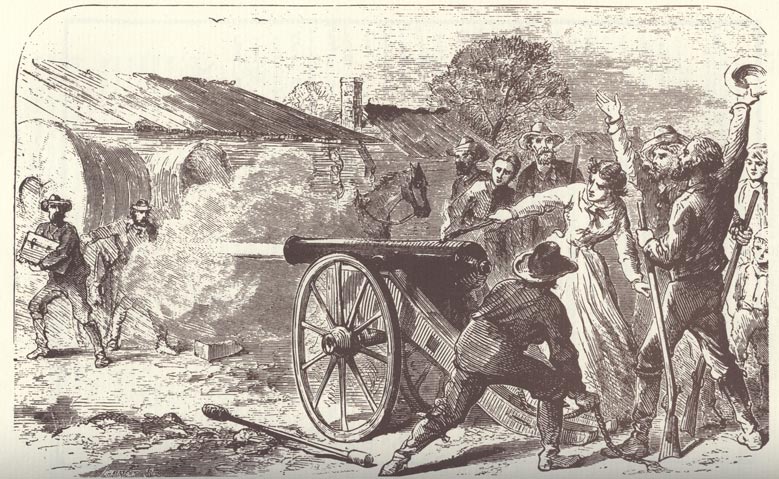
The Driskill was built in 1886 as a showplace for a cattle baron. Today it is one of the most elegant hotels in the State of Texas. In addition to it’s convenient location (it’s a short walk from the conference hotel at 117 E. 7th Street), it is next to one of the most important monuments in Austin: the Angelina Eberly statue, commemorating the Texas Archives War. To see the statue (which is on Congress Avenue between 6th and 7th Streets) and learn more about the Texas Archives War, check out this video. There’s also a really good blog post about the Texas Archives War here.

*Image courtesy of the Southwestern Historical Quarterly, Vol. 64, No. 2, p. 178.

Blogging the 2009 SGA 40th Anniversary Meeting*


Between August and November, SGA’s Outreach Committee will be blogging about Savannah and the 2009 Annual Meeting. We will be posting information on our speakers and sessions, and also on all of the sights and sounds that Savannah has to offer.

We will provide you with tips on tours, historical sites, and museums; restaurants, bakeries, and coffee shops; boutiques and antiques; parks and beaches; and so much more. Additionally, we hope to discover really, really good deals on dining, happy hours, and activities – everything you need to make Savannah an exciting destination without putting a strain on your wallet!

Oh, yeah – and we have a great program planned for our 40th Anniversary, too. Confirmed guests include David Gracy (keynote speaker), Elizabeth Yakel (archival metrics), and Geof Huth (electronic records). We will be providing more information about speakers’ backgrounds, planned sessions, and other 40th Anniversary events.

Don’t forget that the personal expenses you incur at the annual meeting can be itemized and deducted from your taxes! We know that for many Georgia archivists, institutional support will be greatly reduced this year, and keeping track of your receipts is an easy way to make the annual meeting and associated workshops a benefit to you come tax time. For more information on work-related educational expenses, visit the IRS’ Tax Tips online.

If you have questions about blogging the annual meeting, or if you would like to contribute your favorite Savannah tips to the blog, please contact Traci Drummond (tdrummond@gsu.edu) or Courtney Chartier (cchartier@auctr.edu).

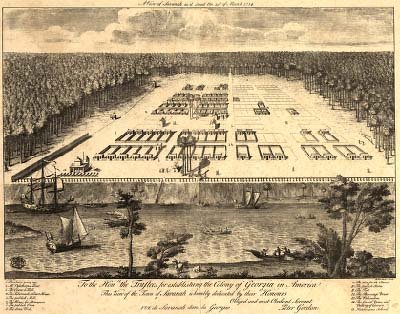
*Gordon, Peter. A view of Savannah as it stood the 29th of March 1734. Map. 1876. From: Library of Congress Map Collections, 1500-2004. http://hdl.loc.gov/loc.gmd/g3924s.pm001305 (accessed July 9, 2009).

TOUR IS FULL!!!!! We cannot accept anymore requests. Thanks.

Tour of the Fox Theatre

SGA is happy to offer its members a free behind the scenes tour of the Fox Theatre on Friday, July 10th from 1:30-4:00. There will be no charge for the tour, but it will be limited to 15-20 people.

If you are interested, please let me know as soon as possible.
404-894-9626
jody.thompson@library.gatech.edu

Jody Thompson, Chair
SGA Membership Committee