Safely Storing Your Art

By Jill Sweetapple, SGA Blog Contributor

Please welcome Tricia Miller, Head Registrar at the Georgia Museum of Art, based at the University of Georgia in Athens.
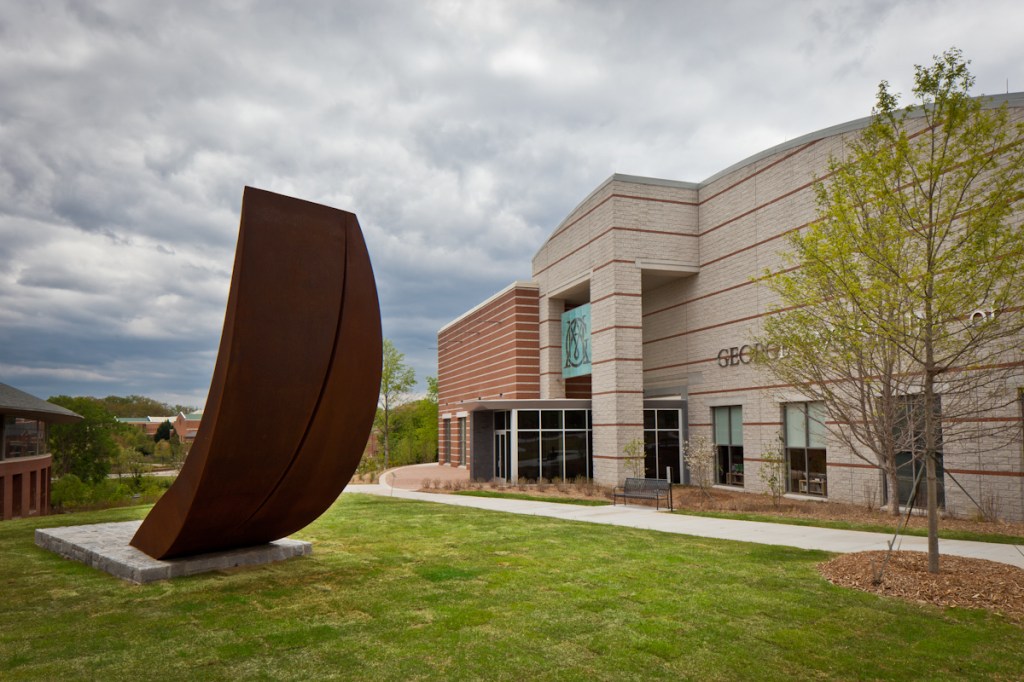
Georgia Museum of Art

Tricia Miller has a Masters in Art History from the University of South Carolina, with a concentration in what was then called “Applied Art History.” She says her first paid job was as Director of the Stanly County Historic Preservation Commission in Albemarle, North Carolina (now the Stanly County Museum). Along with two other employees, they did everything from exhibition development, to collections management and sometimes even cleaning duties. She says that job taught her the aspects of museum work that she was good at and enjoyed and what aspects she struggled with or did not enjoy. Her next job was as assistant registrar at the Georgia Museum of Art. She moved up the ranks at GMOA to associate registrar and then to head registrar, and has been with GMOA for 22 years.

Miller estimates that approximately 2% of the 17,000-plus objects are on display, which leaves the problem of storing the rest. As she points out, it is not just about public display, but the storage and preservation of holdings for future generations.

“Institutions with some financial resources to put towards storage of art and the space to handle it may want to look into some standard museum quality storage units. Depending on your objects (framed works or sculpture, or even furniture) your basic options are rolling/sliding racks, bins, cabinets, or shelving. For framed objects rolling/sliding racks (for hanging storage) or metal bins (storage units with vertical slots for storing framed works side by side) are your best option. For small sculptures or other objects (pottery, baskets, silver, etc.) museum quality cabinets with slide out drawers are your best option. For larger items like furniture or larger sculptural items, you may consider industrial, powder-coated metal shelving from industrial supply companies.”

If, like so many of us, you have little cash or perhaps even storage limitations, perhaps you can start small:

“Nobody’s art storage is perfect and we all have something we can improve, even in most museums. My mission each year is to take the resources available to me (money, labor, time) and try improve the storage situation for as many objects as I can. It probably won’t ever be totally perfect, but I know I’ve improved the situation for some objects each year. “

Miller suggests using industrial cardboard bin boxes for storage, which can be purchased from industrial supply companies such as Uline or Grainger in various sizes. Line the bottom of the box with another piece of cardboard or foam-core (for extra stability) and place the framed works vertically in the box side by side. A good rule of thumb is, front-to-front and back-to back. The hardware on the back of frames can damage the front of another frame or the surface of a painting, so by placing them back to back you can avoid unnecessary damage. It is also a good idea to place a piece of cardboard between the frames which are face to face to protect them from rubbing against each other. Keep in mind that many framed works together in a box can become heavy and difficult to move, so consider using more numerous smaller bin boxes rather than fewer large ones. If possible, keep the boxes elevated off the floor, if you can do that safely. Also, you may want to cover the open tops with plastic to avoid dust accumulation and it serves as protection in the event of a crisis situation such as a water leak from a pipe. Avoid wrapping the frames in bubble wrap. As it deteriorates over time, bubble wrap will damage the painted or gilded surface of frames, sticking to it or leaving permanent marks in the surface.

Miller shares the following tips for art that you may have hanging or otherwise on display:

  • If possible, avoid hanging art near heating/cooling vents or above water fountains. The direct flow of conditioned air onto a work of art over the years will possibly make it crack or buckle, any source of water is a potential hazard for works of art.
  • Avoid hanging works of art near windows or in areas where they will get direct sunlight. We know the impact of direct sunlight on paper, and it can eventually have an impact on paintings as well.
  • If possible, avoid hanging works of art in places where other objects (furniture in public areas or other items in storage) may be accidentally pushed up against the work of art. Also, think about the height of a person’s head when they are sitting in a chair or on a bench over which a framed work of art might hang.
  • If possible, avoid hanging works of art in areas where food and drink are prepared or served. It is amazing how food and drink particles can travel through the air! Grease can fly, and carbonated drinks have a potentially wide spray factor when opened.
  • If possible, avoid hanging works of art near pipes, fire suppression sprinkler heads, vents or any other source of water or potential condensation. One of the biggest threats to museum collections is not theft, but water.

Some links to bin box choices:

https://www.uline.com/BL_412/Bulk-Cargo-Containers?keywords=Cardboard+Bin+Boxes

https://www.grainger.com/search/packaging-shipping/shipping-boxes-pads-tubes/shipping-boxes/bulk-cargo-gaylord-containers-lids?tv_optin=true&searchQuery=bulk+shipping+box&searchBar=true&suggestConfigId=6

Regularly tour your storage spaces, looking for potential problems. What is the art leaning against, or what is leaning against it? What is around the art and what is moving around it-is it in a main thoroughfare? And, what can you do to mitigate the risks?

One of the biggest risks for paintings in non-museum storage is damage to the surface of the work either by puncture or abrasion from another object. Consider putting paintings in a container, if possible, such as the bin boxes mentioned above. If the object is too large to go in a container, there may be other options. Large paintings can be faced with a piece of cardboard (the size of the frame) and wrapped in plastic. The cardboard provides some protection from impact on the front and the plastic provides overall protection from potential water damage. Before you wrap the painting, take a picture, print it, and tape to the cardboard (under the plastic) so you can identify the object while it is stored. Additionally, a moving blanket over a piece of furniture can provide some level of protection and help to avoid the accidental scrape or mishap.

Many thanks to Tricia Miller for her time and to Hillary Hazel Brown for the building photograph. The Georgia Museum of Art, on the campus of the University of Georgia, is both an academic museum and, since 1982, the official art museum of the state of Georgia. The permanent collection consists of American paintings, primarily 19th- and 20th-century; American, European and Asian works on paper; the Samuel H. Kress Study Collection of Italian Renaissance paintings; and growing collections of southern decorative arts and Asian art.
https://georgiamuseum.org/
Embodied Memory and Material Archives Interview with Dr. Julie B. Johnson

By Anicka Austin, SGA Blog Contributor,

Visiting Archivist for the Geoffrey Holder and Carmen de Lavallade papers, Emory University Stuart A. Rose Manuscript, Archives and Rare Book Library

During our first in-person meeting in 2019, Dr. Julie B. Johnson shared so many insights about embodiment that I couldn’t write them down fast enough. We formally met during the planning process for an archives-related panel discussion at Atlanta Contemporary Arts Center in collaboration with the knowledge-sharing initiative, Discrit. She, Holly Smith (Spelman College Archivist) and I shared in conversation about the function of archives in ephemeral mediums, particularly for dance-based artists.

Dr. Johnson’s work is an example of what happens when collaborative archival research becomes impactful performance. This abbreviated interview is a look into how she and many collaborators worked with material and embodied archives in the Georgia Incarceration Performance Project (GAIPP).

During GAIPP, students, artists, archivists and community partners worked together to “develop a devised performance out of archival research on the history of incarceration and convict labor in Georgia”. Dr. Amma Y. Ghartey-Tagoe Kootin (UGA) initiated the project, inviting Dr. Johnson on as Co-Director and Choreographer and Professor Keith Bolden (Spelman) and Dr. Emily Sahakian (UGA) on as Co-Directors. Kathleen Wessel (Spelman) was Associated Co-Director and Co-Choreographer.

When asked to talk about her interest in archives as part of creative process, Dr. Johnson says:

I am interested in how people and institutions construct their realities. There’s so much information in what is collected and what is missing from the archives. That, in and of itself, is very much part of the story and part of the overall historical record.

I’m also interested in embodied memory because personal and cultural memory lives and moves in our bodies. Accessing that gives us a way to more deeply understand ourselves and each other and the ways in which we operate in our communities and beyond. And when we tap into embodied memory, we can discover things that might not have been at the surface before.

What we discover in written and material archives can give us a blueprint for searching through our own embodied memories. Our embodied memories can help give context, deeper meaning and fill in the blanks of archival material collections.

In Phase One of GAIPP, Spelman students and incarcerated students who were taking college courses at Georgia-area prisons, used their initial research discoveries to create choreographic prompts. They exchanged movement responses to those prompts before digging deeply into the archives at UGA for Phase Two.

We spent a lot of time working with the archivists who had kind of curated a large collection of materials for us to look at and bring into the creative process. Our students were able to see things like letters from politicians of different states during the Reconstruction-era, reaching out to Georgia leaders, asking them how they built their carceral system so that they could replicate it in their states.

They also drew from meticulously recorded reports of corporeal punishment in convict labor camps, photographs of work sites showing how much of Atlanta was built by prison labor and testimonies from the Georgia Prison Commission involving severe mistreatment of prisoners, which were denied by prison administration and leadership.

We made note of questions that came up, the things that stood out to us. Oftentimes, these might evoke certain bodily impulses that we would follow through improvisation, or we would journal write and read back our journals for themes, key words, phrases that would jump off the page, that we would then assign movement to. Sometimes this happened through individual process or through collaborative choreography.

We started to create different scenes around this work [in Phase Two] and organized the movement material into different vignettes. That material got handed off to participants of Phase Three who were responsible for turning it into an evening length production that premiered at UGA in the fall of 2019 and at Spelman in the spring of 2020.

Dr. Johnson is currently working on Idle Crimes & Heavy Work which builds on GAIPP by looking specifically at Black women’s experiences. This work is being done through her creative practice, Moving our Stories, LLC which uses “dance workshops, choreographic practice, creative and scholarly research, and community dialogues to draw on a deep history of embodied storytelling traditions and creative movement practices”. Idle Crimes & Heavy Work is in partnership with Tambra Omiyale Harris, Artistic Director of Giwayen Mata, an Atlanta-based, all sistah, African dance, percussion, and vocal ensemble. The work is made possible through the 2020-2023 Partners for Change Grant from Alternate ROOTS and The Surdna Foundation.

It feels important to connect archival materials with embodied memory, particularly because Black women’s histories, narratives, and experiences so often go overlooked or erased. We look to the archives to see and amplify the stories that are there and to amplify the glaring omissions from conversations around incarceration that seem to focus so heavily on men.

Dr. Julie B. Johnson

Learn more about The Georgia Incarceration Performance Project:

The Georgia Incarceration Performance Project

Reflecting on the Georgia Incarceration Performance Project by UGA Archivist and Exhibition Coordinator Jan Levinson-Hebbard

Learn more about Idle Crimes & Heavy Work:

Idle Crimes & Heavy Work

Additional resources:

No Mercy Here: Gender, Punishment and the Making of Jim Crow Modernity by Sarah Haley

Chained in Silence: Black Women and Convict Labor in the New South by Talitha L. Leflouria

Podcasts, an Underutilized Tool for Archives?

By Megan Kerkhoff, SGA Assistant Communications Director

Podcasts have been on the rise for the past decade, gaining more downloads every day. They are short episodic audio shows that can cover various topics including, true crime, cooking, celebrities, entertainment, and lifestyle, just to name a few. Podcasts are surprisingly easy to create and consume, making them a great tool for promotion. There are several podcasts that utilize archives to tell history, but there are also podcasts produced by archivists to promote their institutions. How do they go about producing podcasts and can they be an attainable promotional tool for any institution?

Below meet Lolita Rowe, Community Outreach Archivist at Emory University’s Stuart A. Rose Manuscript, Archive, and Rare Book Library, where she gives some sage words of advice on starting a podcast and how it is beneficial to promote archival institutions. The Rose Library currently has three podcasts with multiple episodes already available for downloading, so we asked Lolita how and why she went about creating podcasts for the archives.


How and when did the idea for creating a podcast at your institution come about?

Podcasting as an outreach tool for archives has been on my mind for a while. When I started my position in 2018, I was asked what I wanted to do first. I proposed a podcast. A podcast can be consumed at any time the person who is listening can digest the information. An archives podcast could reach an audience of people who may have never set foot in one before but would be interested in the stories we have about the collections.

I didn’t know what it would look like, but I was inspired by LeVar Burton Reads Live show in Atlanta. Reading Rainbow was my childhood. It created awe, but curiosity and it inspired me to learn. I wanted to do the same for archives, to demystify them and introduce them to people who have never set foot in one, as well as people who may not know what materials the Rose has in its collection.

I knew that others outside of our profession have been doing podcasts, so instead of reinventing the wheel, I wanted to learn how the wheel turned. I went to a Podcast Convention PodX, now PodCon, and purchased a ticket that allowed me to learn from the different podcasters at the convention. I got to speak with the creators and talents behind popular shows like Welcome to Nightvale, Lore, and The History Chicks. When I told them the premise of my show, they were supportive and thought it was a great idea.

I had the idea, but I did not have the tech background until Poetry and Digital Humanities Librarian, Nick Twemlow, was hired. The idea for one podcast morphed into two shows. One that would answer the question, “What is an Archive?,” which became Rose Library Presents: Behind the Archive. The second show would be a conversation about a historical person, event, or place connected to Rose Library collections, which we turned into Rose Library Presents: Community Conversations.

How do you prepare to record a podcast? Any important tools to invest in? Is it nerve wracking?

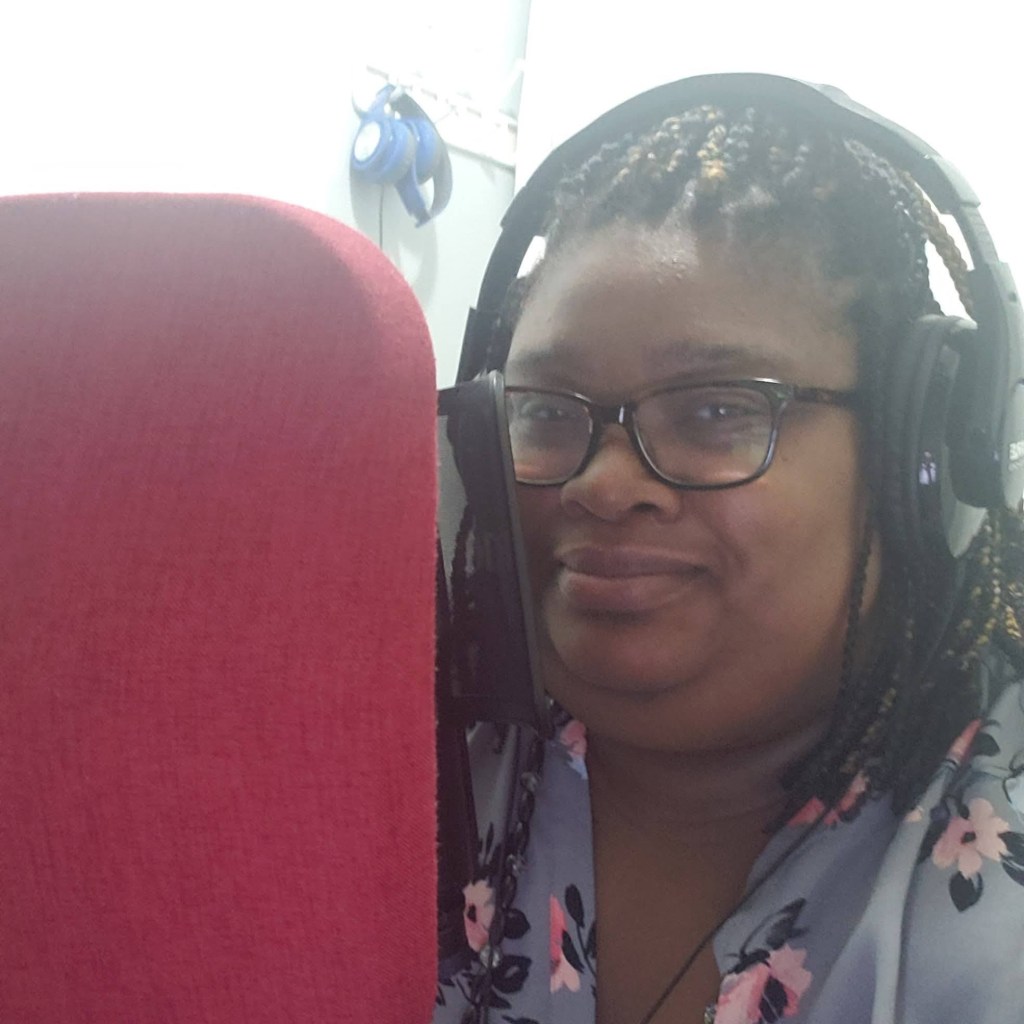
Photograph provided by Lolita Rowe

To answer your last question first, it is nerve wracking when you first start. Then you have the first tech issue or a global pandemic that changes how you thought things would go, and you realize, you got this. Mistakes happen and can lead to a better show. I recorded episodes for both podcasts in February 2020, then the global pandemic gave us a chance to rework how we would move forward. We discovered a platform called Squadcast that allows people to connect anywhere they have access to the internet.  It also led to our colleague, Randy Gue, Assistant Director and Curator of Social and Political Movements, to use the framework and guidelines that Nick and I wrote, to create a third show in our suite of podcasts, Rose Library Presents: Atlanta Intersections. The shows were launched in October 2020 for Archives Month and we have continued to grow our audience ever since.

This delay led us to an amazing editor who could handle any issues we have with sound, since I have been recording in my home’s closet since episode two. Yes, we have Audacity, a free tool, but having an editor who understands how to fix sound levels or give us tips on the backend has been instrumental in our show. We also have Emory Center for Digital Scholarship Lab, who have been extremely helpful with guests who work on campus and can interview in their sound booth. But most of our interviews have happened in our guests’ homes.

The tech has been the most interesting component. The questions feel like a reference interview or an oral history interview. I have prepared questions that we loosely base the interview on, but the interview is about the guest.  I send out an email before the interview with a list of questions, I ask if there is a project or organization they want to highlight and tell them what to expect the day of the interview. The day of the interview we start when they are ready, and once we begin, we have a conversation more than an interview.

Do you think a podcast is attainable for any archival institution to implement? And do you have any tips for podcast beginners?

I think it can be. There is some cost associated with starting a podcast, but podcasts can be as inexpensive or expensive as you make it.  You just need good quality equipment and software. And good quality is not the most expensive microphone. You can use your phone, or your computer’s microphone. Yes, a real microphone is better, but you can start small and build up. Below are some other things to think about as well:

  • Quiet place to record (HVAC hum will also be audible)
  • Recording device (Cell phone, Zoom H4N Recorder, computer)
  • Microphone (Will need an omnidirectional microphone if recording with one mic and two people)
  • Computer for editing
  • Program for editing (Audacity or Audition)
  • For editing, we mostly use Audacity, which is free to download. There are great tutorials online, which are needed.

I think anyone can start a podcast if they have the support to do so. I planned how I wanted to record the shows, when I wanted to record, and my timeline and guest list were thrown out the window in March 2020. Be flexible and adjust to your circumstances. The most imperfect moments are the best.

Do you have any favorite archives and non-archives related podcasts to listen to?

Lore, LeVar Burton Reads, Smartless, The History Chicks, Welcome to Nightvale, Why Won’t You Date Me? with Nicole Byer, and I keep downloading more each day.

Interested in Rose Library’s Podcasts? See the links below!

Rose Library Presents https://rose.library.emory.edu/research-learning/rose-library-presents.html

Behind the Archives https://rose-btarch.transistor.fm/

Community Conversations https://rose-commcon.transistor.fm/

Atlanta Intersections https://rose-atlint.transistor.fm/


Thanks to Lolita Rowe for satisfying our curiosity and helping us to better understand how podcasts are made from the archives. Let’s continue to promote our archives in fun and innovative ways!

Let us know some of your favorite podcasts about or produced by archives in the comments!

Reach out to us at communications@soga.org.

Submit a blog post here.

Robert C. Williams Museum of Papermaking

By Jill Sweetapple, SGA Blog Contributor

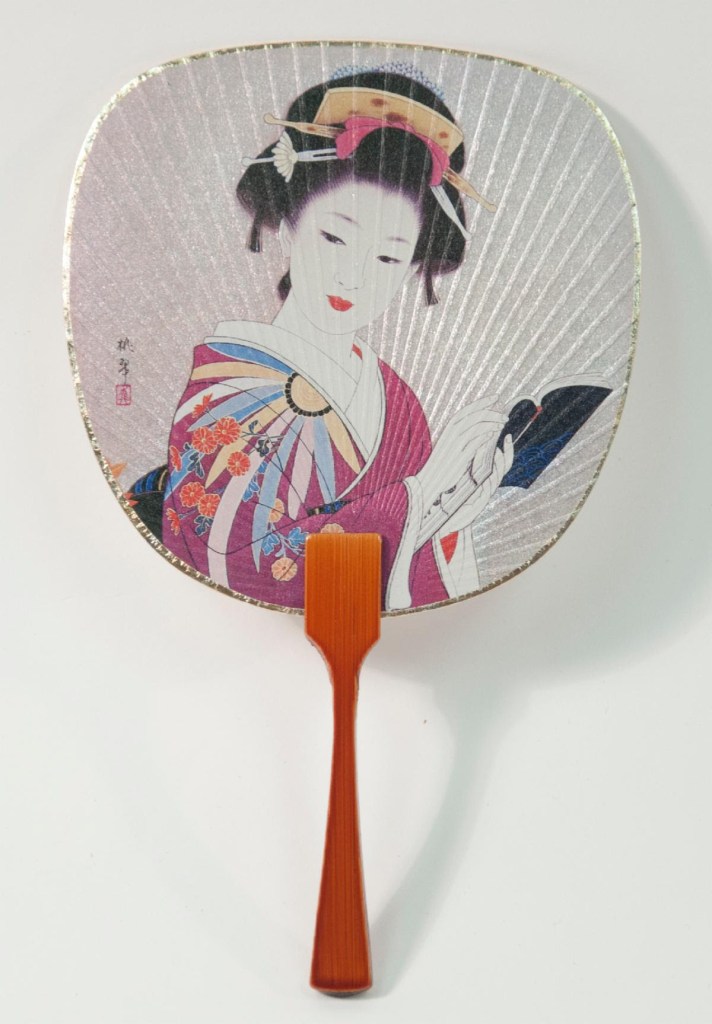
Kyo uchiwa fan, Robert C. Williams Museum of Papermaking

As archivists, many of us work with paper every day. But how about a museum and archive devoted to paper? The Robert C. Williams Museum of Papermaking, on the campus of Georgia Tech, is exactly that. Virginia Howell is the museum’s director, which holds about 100,000 artifacts and 10,000 books. Not all pieces are catalogued; it is an ongoing project, and the collection breaks down into three large categories:
– artifacts, which make up the bulk of the collection, and primarily paper or paper making tools and materials
– the Dard Hunter Library, which contains books about papermaking, Hunter’s works, and related topics such as typefaces and papermaking machinery
– the museum archive, the smallest part of the collection, primarily supporting documents provided by Museum founder Dard Hunter, relevant information from the Institute of Paper Chemistry, and a slide collection of paper artists.

Howell says that one of the biggest challenges is a philosophical question: when is an item an artifact, and when is it archival material?

“A great example of this is the paper sample books in the collection. Over time they have been housed as books in the book room (but they have no text) or as artifacts (but they are more useful due to their content than as an object). When we had only a few identified sample books, it made sense to treat them as artifacts. But when we discovered that there were many, many more sample books than initially thought, we decided to change approach and treat them more like books. But further discussions about possible use and storage needs have resulted in us treating them as a hybrid: they are stored in a single location in the main collections storage, but the descriptions and information about the work is treated more like we catalogue items in the book room.”

Howell and the museum are working on making the collection more accessible in virtual formats. That includes gallery talks and panels, hands-on workshops and virtual exhibits. Additionally, they hope to be able to get more of collections online.

“The pieces in the archive are primarily letters and ephemera, with the exception of the slide collection. Because the collection is so small, we typically include it, catalogue-wise, with the artifacts in the collection. Items have been organized, but many were not entered into Past Perfect, so we are slowly entering into the database and scanning/photographing as we go along.”

You can sign up for an informational email that highlights the workshops they create for all ages, plus my favorite feature, Artifact of the Month. Howell says artifact of the month is a student-run project. April’s feature on a Japanese Kyo uchiwa fan, a fan which does not open, was written by Kayla McManus-Viana:

“Japanese Kyo uchiwa fans are thought to have been developed after similar Korean fans, which were brought to Japan by wakou (pirates) active along the coasts of China and Korea during the 14th century, influenced the designs of the fans used by the Japanese imperial household. However, it was not on the coast but in Kyoto where the design of these Japanese fans was perfected and from where they got their name (“kyo”).”

Classes vary from virtual silk screen printmaking (April 28) to making paper beads. In May, you can make a tunnel book or a stomp rocket. What are those? Visit the Workshops page to find out. Programs are free or low cost. Do not forget their You Tube channel, where you can check out the Paper Animation Fast Film Festival!

You Tube Channel: Robert C. Williams Museum of Papermaking

Robert C. Williams Museum of Papermaking, Georgia Tech
https://paper.gatech.edu/