SGA Members Set to Take Over ACA!

There are three (3) SGA members running for national positions with the Academy of Certified Archivists. If you are a member of ACA, please review their candidate statements and consider them as you vote.


Running for Vice President/President Elect:

Kaye Minchew
Troup County Historical Society and Archives

Question: “What is the primary benefit of ACA membership and why?”

Answer: “The primary value of ACA membership varies for different people and different groups.
For individuals, the primary benefit of ACA membership is being judged to have met a series of standards needed to become a professional archivist. One should rightly be proud to have mastered a core area of knowledge and gained work and professional experience to become certified. The fact that these standards to become a certified archivist have stood the test of time for more than twenty years, and have been strengthened and refined over time makes the value of ACA membership even stronger.

Employers looking to hire a new staff member benefit from ACA by having a professional standard to judge qualifications of prospective employees. ACA membership strengthens a candidate’s position when applying for jobs.

For the archival field as whole, the primary benefit of ACA membership is greater professionalism. A non-profit certifying board has identified basic areas of knowledge which practitioners have been judged to have learned plus ACA members participate at work and in professional organizations. The fact that members must be recertified every seven years encourages ACA members to stay active and involved in the profession.”


Running for Secretary:


Renna Tuten
Richard B. Russell Library for Political Research and Studies, UGA


Question: “What is the primary benefit of ACA membership and why?”

Answer: “In my opinion, the primary benefit of ACA membership is being part of a body of professionals who voluntarily dedicate themselves to actively keeping abreast of advances in professional development while sustaining traditional and proven models of archival practice. Although there are many organizations devoted to serving those in the archives and records management profession, the Academy of Certified Archivists is the only one that requires recertification, which, in turn, yields a group of people who openly demonstrate this commitment.

The advantages that stem from such a high standard of membership include: advocacy among employers regarding a set standard of acceptable qualifications; a clear statement regarding the role of an archivist in the workplace; support of expanding graduate-level archival education, and the attraction of more and more members who are drawn to an organization centered around a defined knowledge base and not just paid dues.

Another set of benefits that can be gleaned from such a strong membership body is the continued commitment to create an exam that advocates a thorough course of study as it covers all areas of archival work, not just the most common ones. Because of the lack of true standardization in archival education, some areas of knowledge (say, legal issues and preservation) are often secondary to others like arrangement and description. In this same vein, the Academy’s openness to applicants from different educational backgrounds is an asset to the group by not advocating one correct path to certification.

All of these assets and benefits come together to make an organization that is greater than the sum of its parts. Its operating philosophy and ethics work together with its membership’s commitment to sustaining and pursuing archival knowledge work in concert to create an academy in the truest sense.”

Running for Regent for Certification Maintenance:

Christine de Catanzaro
Archives and Records Management, Georgia Tech


Question: “What is the primary benefit of ACA membership and why?”

Answer: “ACA membership is beneficial to all archival professionals, whether they are seasoned archivists or just starting out in the field. One primary benefit of membership in ACA is that certification provides a professional credential that is well understood by administrators and those in other professions as well as those who are practicing archivists. Job seekers know that certification is increasingly listed as at least a desirable qualification, if not a required one, for professional positions in the archival world. Employers understand that certification signifies the attainment of a certain level of knowledge and experience in the archival profession.

But I think the benefits of ACA membership go well beyond assisting job seekers. ACA offers us a community in which each of us can strive to promote and maintain high standards in the archival profession. Through my participation on the Exam Development Committee, and before that as a booth volunteer, lecturer, and exam item-writer, I have come to appreciate the importance of this work even more. I have seen the deep commitment to excellence from the ACA officers and from my colleagues on the EDC, and that has inspired me to commit myself to the high standards I see around me.

ACA also encourages all of us to maintain and refresh our skills through recertification. When we recertify, if we don’t choose to take the exam, we need to be sure that we have credits in employment, education, professional participation and outreach, professional service, and/or writing, publishing, and editing. If we choose to recertify through examination, we need to become current with the latest trends and developments in our profession through reading and study.

ACA membership creates an invaluable community of archivists committed to promoting and maintaining high professional standards. This, to me, is the greatest benefit of association with ACA.”


Spotlight on "Provenance"

p.p1 {margin: 0.0px 0.0px 0.0px 0.0px; font: 12.0px Times} p.p2 {margin: 0.0px 0.0px 0.0px 0.0px; font: 12.0px Times; min-height: 14.0px} p.p3 {margin: 0.0px 0.0px 0.0px 0.0px; font: 12.0px Times; color: #0033cc; min-height: 14.0px} span.s1 {color: #0033cc} ul.ul1 {list-style-type: disc}

I learned many things at the Georgia Archives Institute in 2010, but one of the most important was the value of professional journals.  Our instructor, Tim Ericson, former Director of Archival Studies, University of Wisconsin-Milwaukee School of Information Studies, was clear about the importance of keeping up with current issues in the profession, and off the top of his head, he could list the state and local organizations that produced their own journals.  First on the list, of course, was the Society of Georgia Archivists’ Provenance.  In 1972, Provenance became the first professional archival journal published by a state or regional organization.  It was founded and first edited by David B. Gracy II, and today has a circulation of over 300 internationally.  The current editor is Brian Wilson, Reference Archivist at the Georgia State Archives, and he was kind enough to explain what they are looking for in a submission.

According to the SGA website, “The journal’s primary focus concerns the archival profession in the theory and practice of archival management.” Recent issues have included:
  • archival education
  • electronic records
  • automation 
  • imaging
  • appraisal of university records
  • moving archives
  • management of audiovisual, photograph, oral history, and map materials
  • military archives
  • documentary editing
  • research use of archives
  • case studies in appraising congressional papers
  • ethics
  • descriptive standards
While this is a pretty extensive list of topics, Wilson explains that “Provenance … should balance practical, every day issues with more scholarly, academic articles” and notes that he would like to see more submissions that deal with how archivists work with researchers.  “I’d love to see more articles that deal with practical issues that archivists see and deal with everyday.  I’d like to see something written about reference work or about dealing with a customer base that is no longer coming into archives ‘physically.’” He continues that it doesn’t matter to him what level the author holds in the profession, be it student, professional or retiree since they all offer interesting views.  Students (or recent students), he explains, come at the profession with questions that many of us don’t think to ask, but older professionals tend to have more insight to practical applications to archival theory.  

When asked about his favorite submission, Wilson replies with a number of responses. First, he discusses an article on Amelia Earhart’s poems; then there’s his own coup of getting the new Archivist of the United States to write a short “acknowledgement” of SGA’s 40th anniversary last year; and finally, “I think the most important article that now gets published is the keynote address presented at the SGA annual meeting each year, as I think that reflects (for posterity) precisely where our interest as an organization is each year. It was the idea of Suzanne Durham (archivist at West Georgia) to print that and I think it was an excellent idea.”

While Provenance is the journal for the Society of Georgia Archivists, Wilson says he doesn’t feel the need to be strict about the geography.  “I’ve seen past issues deal with collections in Alabama, Mississippi, South Carolina, and Louisiana.”  While he does try to keep submissions geared to the state, he doesn’t want to dissuade submissions involving archival records or ideas from another state.  He would also like to see Provenance published in alternate formats to reach a wider audience.  

The deadline for submissions to Provenance is the end of July to allow the editorial staff four or five months to edit the submissions, peer review, and deal with the publishing side of things.  Wilson adds that while he doesn’t want to dismiss outlines or ideas for articles, it is impractical and time consuming to work those into a full Provenance article.  

“The Provenance editorial board actively seeks articles, case studies, and review essays which increase understanding of archival issues, highlight new topics, or that broadens the scope of knowledge for people working with archival collections in the state of Georgia. Articles written for publication in Provenance should be original works and authors should keep in mind the following guidelines and rules of structure….”

For more information on Provenance and submitting an article, please see http://www.soga.org/publications/provenance/contributors.


*Contributed by Laura Starratt, Atlanta History Center.

Workshop: Disaster Recovery

News from just next door in South Carolina…

No ever thinks of the disasters that could strike an archives or library.

Sure there are hurricanes, floods, and fires.  But, what about the less obvious disasters like busted pipes, sewage leaks, or a leaky HVAC unit?

Do you know what to do when a sudden disaster befalls a collection at an archives or library?

In conjunction with the Palmetto, Archives, Libraries, and Museum Council on Preservation (PALMCOP), the Archival Students Guild is proud to host a disaster workshop.  Preservation officer, Heather South will present “Disaster Recovery and Response: An Exercise in Disaster and Planning.  Participants will gain hands-on experience in salvaging documents and other materials in the event of a disaster.

Where: South Carolina Department of Archives and History (8301 Parklane Road, Columbia, SC 29223)
Date: Saturday, March 26, 2011
What time: 10 a.m. (please arrive between 9:30 and 9:45)

Please complete the registration form by March 20, 2011.  The registration form should be emailed to soarchiv@mailbox.sc.edu.  Space is limited to the first 30 people.  Lunch will be provided courtesy of ASG.

Come rain or shine, this event will take place and wear comfortable shoes.


Georgia College Publishes Cartoons of Famed Alumnae Flannery O’Connor

Mary Flannery O’Connor is best known for her 32 short stories and 2 novels, but during her years at Georgia State College for Women (former name of Georgia College & State University) she was the author of many humorous and witty cartoons. Numerous examples of her artwork appeared in the school’s newspaper, literary magazine, and newspaper.

Recently, Georgia College has published a book of the cartoons with the help of Special Collections’ materials and staff. The Cartoons of Flannery O’Connor at Georgia College, a 112-page, soft-cover coffee table book, provides the never before assembled and published collection of the author’s cartoons that appeared in four Georgia College publications during her undergraduate years, 1942-45. 

“The humor is silly, even outrageous,” wrote Dr. Sarah Gordon, Georgia College professor emerita of English, in her introduction to the book.  “The same impulse that would later lead Flannery O’Connor to create the sharp-edged and often wickedly funny characters in her fiction drove her popular cartoons (mostly lino-cuts) in her years at GSCW…”

Gordon is the former editor of the Flannery O’Connor Review and former director of the O’Connor Studies Program at Georgia College.

The book includes a foreword by university President Dorothy Leland.

“It is a distinct honor for Georgia College to be the permanent home of the O’Connor Collection, including the cartoons originally published by Georgia State College for Women and now featured for the first time in this book,” Dr. Leland wrote in the foreword. “We are pleased that these cartoons can now reach a broader audience and further enrich Flannery O’Connor scholarship.”

The book cover features a graphic signature that O’Connor used, combining her initials, M, O’C and F (Mary Flannery O’Connor) to create a caricature of a bird.  While some of the cartoons were digitally enhanced for the publication, care was taken not to alter the art.

The cartoons originally appeared in The Colonnade student newspaper, The Spectrum yearbook, The Corinthian literary magazine and the Alumnae Journal.  Also included are cartoons that O’Connor drew earlier for The Peabody Palladium, the student newspaper of Peabody High School in Milledgeville.

The original cartoons are housed in Georgia College Special Collections, as part of its permanent O’Connor Collection, along with thousands of pages of typescripts and manuscripts, photographs, tape recordings, films, letters, memorabilia and her personal library of more than 700 books and journals.

For more information about The Cartoons of Flannery O’Connor at Georgia College or about the Flannery O’Connor collection, please contact Special Collections at scinfo@gcsu.edu.

*Contributed by Katherine Pope, Special Collections, Georgia State College & University. Image used with permission.


2011 Georgia Archives Institute

It’s time to apply for the 2011 Georgia Archives Institute!

44th Annual Georgia Archives Institute
June 6 – 17, 2011
Designed for beginning archivists, manuscript curators, and librarians, the 44th Georgia Archives Institute will offer general instruction in basic concepts and practices of archival administration and management of traditional and modern documentary materials.  The Institute will be held at the Georgia Archives in Morrow, Georgia, 15 miles south of Atlanta.

Dr. Timothy L. Ericson, former Director of Archival Studies, University of Wisconsin-Milwaukee School of Information Studies, will be the instructor during the first week. Topics will include acquisition, appraisal, arrangement, description, reference, as well as legal and administrative issues.  The second week of instruction will begin with training on preservation by Christine Wiseman, Preservation Manager at the Georgia Archives.  To link archival theory with real world application, students will also participate in individualized, three-day internships at local archival repositories.

Tuition is $500.  Enrollment is limited and the deadline for receipt of application, resume, and $75 application fee (refunded if not admitted to Institute) is March 1, 2011. Tuition does not cover transportation, housing, or meals.

Tuition scholarships are available from the Society of Georgia Archivists, www.soga.org and The Friends of Georgia Archives and History, www.FOGAH.org.  Scholarships have earlier deadlines. 

For an application to the Institute or information, please visit the Georgia Archives Institute web site at www.georgiaarchivesinstitute.org or contact:
Georgia Archives Institute
P.O. Box 279
Morrow, GA 30260-0279
Email: GeorgiaArchivesInstitute@yahoo.com 

SAA: Philip M. Hamer and Elizabeth Hamer Kegan Award

Please excuse cross-postings!

Society of American Archivists – Philip M. Hamer and Elizabeth Hamer Kegan Award

The Philip M. Hamer and Elizabeth Hamer Kegan Award Subcommittee of the Society of American Archivists seeks nominations for the 2011 award.

This award recognizes an archivist, editor, group of individuals, or institution that has increased public awareness of a specific body of documents through compilation, transcription, exhibition, or public presentation of archives or manuscript materials for educational, instructional, or other public purpose. Archives may include photographs, films, and visual archives. Publication may be in hard copy, microfilm, digital, or other circulating medium.

Recent winners include:

2010 The Giza Archives Project at the Museum of Fine Arts, Boston
2009 Ward M. Canaday Center for Special Collections of the University of Toledo’s “From Institution to Independence”
2008 Canadian Broadcasting Corporation and the CBC Digital Archives (Les Archives de Radio-Canada)
2007 National Library of Medicine’s “Profiles in Science”

Eligibility:
Individual archivists and editors, groups of individuals, organizations.

Application Deadline:
All nominations shall be submitted to the Awards Committee by February 28.

For more information on SAA awards and the nominations process, please go to http://www.archivists.org/recognition/index.asp

44th Annual Georgia Archives Institute


Designed for beginning archivists, manuscript curators, and librarians, the 44th Georgia Archives Institute will offer general instruction in basic concepts and practices of archival administration and management of traditional and modern documentary materials.  The Institute will be held at the Georgia Archives in Morrow, Georgia, 15 miles south of Atlanta.


Dr. Timothy L. Ericson, former Director of Archival Studies, University of Wisconsin-Milwaukee School of Information Studies, will be the instructor during the first week. Topics will include acquisition, appraisal, arrangement, description, reference, as well as legal and administrative issues.  The second week of instruction will begin with training on preservation by Christine Wiseman, Preservation Manager at the Georgia Archives.  To link archival theory with real world application, students will also participate in individualized, three-day internships at local archival repositories.


Tuition is $500.  Enrollment is limited and the deadline for receipt of application, resume, and $75 application fee (refunded if not admitted to Institute) is March 1, 2011. Tuition does not cover transportation, housing, or meals.


Tuition scholarships are available from the Society of Georgia Archivists, www.soga.org and The Friends of Georgia Archives and History, www.FOGAH.org.  Scholarships have earlier deadlines.  


For an application to the Institute or information, please visit the Georgia Archives Institute web site at www.georgiaarchivesinstitute.org or contact:

Georgia Archives Institute

P.O. Box 279
Morrow, GA 30260-0279
Email: GeorgiaArchivesInstitute@yahoo.com
*Drawing of Georgia Archives, Morrow, GA, from http://www.georgiaarchivesinstitute.org

News From Next Door: South Carolina Edition


The Waring Historical Library and MUSC University Archives announce the opening of a new web exhibit:

“Civil Practice to Civil War: The Medical College of the State of South Carolina, 1861-1865”

http://waring.library.musc.edu/exhibits/civilwar/

The Medical College of the State of South Carolina (MCSSC), as it was known from 1832 until 1952, suspended classes after the March 1861 graduation, just three months after South Carolina seceded from the Union and a month before shots upon Fort Sumter marked the official commencement of hostilities between North and South. Almost immediately, many of the College’s faculty, students, and alumni joined the Confederate military and the College was left dormant for five long years. Even while the College was on hiatus, its students, alumni, and faculty were getting an entirely new education in the field hospitals and on the battlefields. The exhibit tells the stories of but a few of the hundreds of MCSSC’s alumni, faculty and students who took their medical bags to war.

For more information about the web exhibit, please contact Brooke Fox, University Archivist at foxeb@musc.edu.


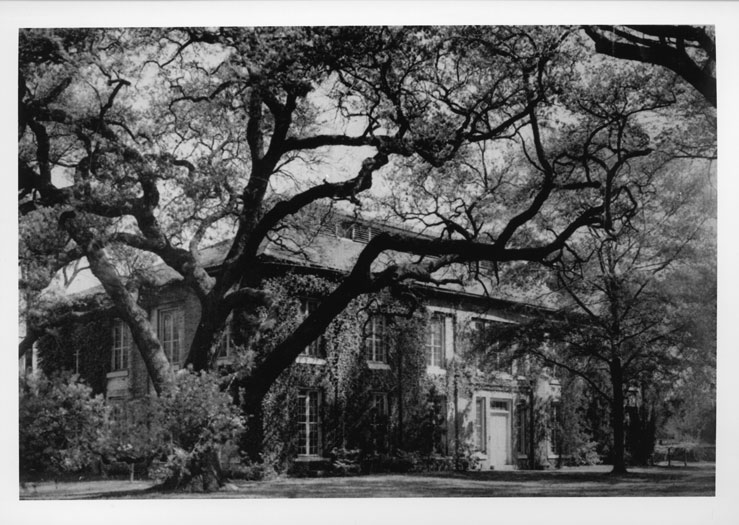
*Colcock Hall, n.d., Waring Historical Library, MUSC, Charleston, SC

Savannah Heritage Emergency Response Workshop

Insurance and Appraisal for Disaster Recovery for Cultural Heritage Organizations. Savannah, GA . January 18, 2011.
Day long workshop on insurance and appraisal of cultural heritage collections, targeted to museums, galleries, historic house museums, and libraries. Sessions to be held January 18th 2011, at the Metropolitan Planning Commission, 112 E. State St.  Registration 8:30- 9:30, Programs 9:30-3:30. $25.00
Registration:  Please mail registration form with your name, address, phone, e-mail, institutional affiliation (if any) and a check made out to CEMA (Chatham Emergency Management Agency) and mail to Beth Reiter, Chairman of SHER, 202 Atkinson Avenue, Savannah, Georgia 31404. 912-234-9398; reitlatt@comcast.net
Morning Speakers: Jeff Minett and Lynn March, Senior Vice Presidents with Aon/Huntington T Block Insurance Agency.  Topics will include coverage, exclusions, evaluation, incoming and outgoing loans, terminology, certificates of insurance, notice of loss, arbitration, and how to reduce the financial impact of a risk.
Afternoon Speakers:  Debra Freer, Senior Appraiser with Aaron Appraisal Services in Atlanta, Ga. Topics will include appraisal of fine art, decorative art, antiques and she will share insights from her appraisal of the Fox Theatre’s collection in Atlanta.  One description is present and the other future – do we want to be consistent?
Off street parking can be found in the City’s State and Bryan Street parking garages.