54th Georgia Archives Institute: June 7-18, 2020 at the Georgia Archives

Designed for beginning archivists, manuscript curators, and librarians or those whose positions have expanded to include the management and care of their organization’s archives or manuscript/history collection, the Georgia Archives Institute provides general instruction in core concepts and practices of archival administration and the management of traditional and modern documentary materials.  Recipient of the 2016 Society of American Archivists’ Distinguished Service Award, the Institute is a two-week program held at the Georgia Archives in Morrow, Georgia, near metro Atlanta, which includes six days of classroom instruction and a three-day internship. 

Instructional topics include appraisal, accessioning, arrangement and description, reference and outreach, security, copyright, born-digital records; as well as a whole day on the preservation and care of archival materials.  To link archival theory with real-world application, students will also participate in individualized, three-day internships at local archival repositories.  The internship provides an opportunity for students to observe the operations of an archival facility combined with hands-on experience processing archival collections.

Pam Hackbart-Dean is the Head of Special Collections & University Archives at the University of Illinois at Chicago. She has worked at Special Collections Research Center at Southern Illinois University Carbondale, Special Collections & Archives at Georgia State University and for the Richard B. Russell Library for Political Research and Study at the University of GeorgiaShe has conducted a number of workshops on arrangement and description, as well as published articles and books on the subject. The Preservation of Archival Materials day-long session will be taught by Tina Seetoo, Preservation Manager at Delta Flight Museum.  

Tuition is $500 and enrollment is limited to 20 students.  Deadline is midnight on March 15, 2020 for receipt of application and $75 application fee (which is refunded if not admitted to the Institute).  Tuition scholarships are available from the Society of Georgia Archivists (SGA) (http://www.soga.org/scholarships/hart) and the Friends of Georgia Archives and History (http://fogah.org/programs/dunaway-scholarship/).  Successful applicants, who are not members of the Society of Georgia Archivists, will receive a free membership for one year.


For an application to the Institute, detailed schedule and additional information, please visit our website at www.georgiaarchivesinstitute.org or contact us at georgiaarchivesinstitute@gmail.com.
x
Columbus State University Archives Open House

You’re invited to an open house at the newly renovated Columbus State University Archives!

When: Tuesday, November 19, 2019
Doors open at 5:00 p.m. and welcoming remarks begin at 6:00 p.m.

Where: Simon Schwob Memorial Library, ground floor (4225 University Ave., Columbus, GA 31907)

One key element of the Schwob Library renovation project involves the CSU Archives. The Archives will move to the ground floor of the library allowing for a number of transformative changes. A new reading room will help archival staff better meet the needs of researchers, including students, local community members, and visiting scholars. A new multipurpose room will expand archival operations in areas of classroom instruction and outreach, accommodating large class groups needing assistance in conducting archival research and hosting programs for the community such as workshops on preserving family history. Most important, however, is the new collections storage vault. New environmental controls will ensure the preservation of the Archives’ priceless collections that include material dating back to the 1590s.

The Columbus State University Archives, established in 1975, serves as a repository for historical and cultural materials documenting Columbus State University, the city of Columbus, and the surrounding Chattahoochee Valley area. Today the Archives contains over 5,000 cubic feet of material in nearly 500 distinct collections. These collections serve a wide range of visitors including university students, faculty, and staff as well as local community members. Scholars from around the world also conduct research in the CSU Archives with recent international researchers from Japan, Singapore, France, Belgium, and Germany. Some of the topics researchers are interested in include the textile mill industry, Creek Indian removal, local author Carson McCullers, the Civil War, the Chattahoochee River, Fort Benning, and local family history and genealogy. 

Congratulations to New SGA Fellow Sheila McAlister

The Society of Georgia Archivists Fellows Award recognizes outstanding contributions to archives and archivists in Georgia. To read more about the SGA Fellows Award go here
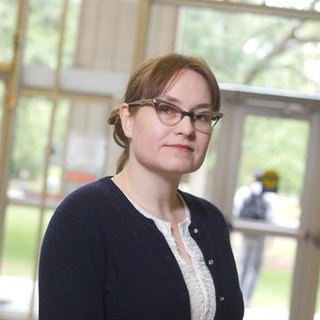
Sheila McAlister serves as the Director of the Digital Library of Georgia. She has been an active member of SGA for 21 years. In the words of her nominator, Sheila’s “impact on the Georgia archival community is exhibited in her efforts to build archival capacity among smaller, less resourced institutions in the state. She regularly consults with institutions at no cost to them to help develop and maintain their physical and digital collections.Throughout her career, Ms. McAlister has remained committed to helping develop sustainable archival efforts by working to provide access to services, resources, and training to Georgia cultural heritage organizations. Her dedication to fostering sustainable archival activities in under-resourced institutions and her positive representation of the association on the national scale, are excellent examples of work worthy of a fellowship.” 
Again, congratulations to Sheila for her hard work and dedication to the archival community.

SGA’s President’s Award Presented to Dr. Catherine Oglesby


President’s Award, Dr. Catherine Oglesby
Nominated and text written by Colleague Deborah S. Davis, Director, Professor, Valdosta State University Archives and Special Collections


On behalf of the Society of Georgia Archivists Board, it is my great honor to recognize Dr. Catherine Oglesby, recipient of the 2019 President’s Award as we celebrate fifty years of combining social connection with our social responsibility to preserve the past and the present for the future.

The SGA President’s Award recognizes individuals or organizations from outside the archival profession who make significant contributions to it. These supporters — be they legislators or administrators or researchers or others — are absolutely vital to the archives field and individual archivists. Advocates from other communities, with different perspectives, illuminate our relevance to the wider world and encourage us to question our status quo. 

 Dr. Oglesby is a recently retired professor of history at Valdosta State University. Through her teaching there she created a lot of synergy between history and the Valdosta State University Archives and Special Collections. In the early 2000’s Oglesby came up with an idea to do extra credit assignments for her entry level history students. The Volunteer Extra Credit program continued unceasingly since 2004 with other history professors participating as well. Over the years processing 200 boxes of presidential papers, created extensive databases for indexes of our local paper, our college newspaper, and 42 years of news scrapbooks. Over 600 students have participated in the volunteer program. 
Dr. Oglesby has also been instrumental in bringing valuable collections to the archives. She worked to acquire and process the extensive Leona Strickland Hudson collection, She researched the collection and wrote the biography and an extensive timeline of the family from 1870 to 2008. In order to process the collection, Catherine approached the executor of the estate and we received a $25,000 grant to pay for the work. She also donated other important collections for the archives: the Catherine Oglesby Civil Rights Collection– and the Southern Patriot Newspaper: Valdosta State has been actively collecting in African American history and Civil Rights history and Catherine’s gifts got them started. 
It’s rare that a friend of the archives comes along who has shaped teaching and collecting as much as Dr. Oglesby. We are very much richer for her passion for working with archives. According to the description of the award, you are looking for people who are “absolutely vital to the archives field and individual archivists.” Dr. Catherine Oglesby has been a stellar example of that for the Valdosta State University Archives and Special Collections.

Medical ledger documenting 19th century Athens freedmen now freely available in the Digital Library of Georgia

CONTACT: Deborah Hakes, dhakes@georgialibraries.org

ATLANTA — A Reconstruction-era medical ledger detailing the names of hundreds of African American freedmen has been digitized and made freely available online through the Digital Library of Georgia. The project is a partnership between Georgia HomePLACE, the digitization unit of the Georgia Public Library Service; and the Athens-Clarke County Library, headquarters of the Athens Regional Library System.

The medical ledger, created by Dr. Joseph Barnett Carlton (1822-1881), is an excellent resource for researchers and genealogists seeking to identify and locate African Americans following the end of the U.S. Civil War. A leather-bound volume of hand-lettered pages, the ledger contains the names, diagnoses, and medications sold to freed African Americans by the physician. Entries are dated 1867-1872 and provide the first and last names of patients along with the date of treatment. 
“This ledger is an incredible piece of history,” said Athens Regional Library System Executive Director Valerie Bell. “It offers us a rare glimpse into the lives of African American Athenians in the years immediately following the Civil War and Emancipation, which is valuable both to family history researchers and students of history and medicine. We are so pleased to partner with HomePLACE to make this treasure more accessible for everyone.”
Included in many entries are the illness for which the patient was treated and the cost for the treatment and any medicine. Payments made towards the bill are documented along with the dates of the payments and the date when the account is paid in full. One interesting entry shows that Dr. Carlton treated a young patient on Christmas day in 1872.

Dr. Carlton was a physician for 35 years. He served as surgeon of the Toombs Regiment, C.S.A., and was a graduate of the University of Georgia and the Medical College in Augusta. Dr. Carlton also served in the Georgia House and Senate.

“The Carlton ledger of Freedmen is an expressly cherished piece in our collection at the Athens-Clarke County Library,” says Ashley Shull, archives and special collections coordinator of the Athens Regional Library System. “This item will connect the family histories for many people within our community.”  

###
Georgia HomePLACE encourages public libraries and related institutions across the state to participate in the Digital Library of Georgia. HomePLACE offers a highly collaborative model for digitizing primary source collections related to local history and genealogy. HomePLACE is a project of the Georgia Public Library Service, a unit of the Board of Regents of the University System of Georgia. HomePLACE is supported with federal Library Services and Technology Act funds administered by the Institute of Museum and Library Services through the Georgia Public Library Service. Visit www.georgialibraries.org

Athens Regional Library System serves the residents of Athens-Clarke, Franklin, Madison, Oconee and Oglethorpe counties with 11 library branches. The system offers an extensive collection of resources and provides access to evolving technology in addition to programs and events for children, teens and adults. Headquartered at the Athens-Clarke County Library, the Athens Regional Library System was named Georgia’s Public Library of the Year in 2017. Learn more at www.athenslibrary.org

Georgia Archives Month Institutional Feature: The "Georgia Room" at Live Oak Public Libraries

Part of Live Oak Public Libraries in Savannah, The Kaye Kole Genealogy & Local History Room at Bull Street Library was established in 1999.  Affectionately nicknamed the Georgia Room, this space has a wealth of Southern history and genealogical resources.  
One of the most unique components is the Gamble Collection, given by a former mayor of the city. The collection includes maps, Civil War-era illustrations, journals on the naval stores business (1921-1949), and scrapbooks on a wide variety of historical topics. Some of the special items in the collection include the employee magazines for the Central of Georgia Railway (1913-1963) and the Southeastern Shipbuilding Corporation (during World War II). There are colorful topics too. If you are looking for a recipe or gardening ideas, there are many books to peruse.
The Georgia Room contains census materials, family histories, county histories and other genealogy materials.  It also has Colonial, Revolutionary, and Civil War records. For researching your family tree, the library’s collection has the most resources from Georgia, North Carolina, South Carolina, and Virginia.  Library staff are able to help researchers trace ancestors from other states and even from other countries.  
For local history, the archive houses newspapers, telephone books, city directories (dating back to 1848), Sanborn maps, and a small collection of yearbooks. Images of newspapers on microfilm include the Savannah Morning News (1763-present), Savannah Evening Press, and the Savannah Tribune. There is also a large collection of clippings and pamphlets on Georgia topics.  
For historians and students of American history, the Georgia Room has a collection of the “Public Papers of the Presidents of the United States” from Herbert Hoover through Bill Clinton.
Items in the Georgia Room are available to the public for in-library use during regular operating hours.  The library also offers access to valuable online resources. Highlights include links to keyword searchable databases such as Ancestry Library Edition, African American Newspapers (1827-1998), HeritageQuest Online, Georgia Historic Newspapers, and a curated list of useful websites, including Family Search. 
Built in 1916 with a Carnegie grant, the Bull Street Library is an excellent example of neoclassical architecture and a neighborhood landmark just south of Savannah’s historic district.  The striking marble block structure is supported by an iron work grid. More iron work in the shelving holds up five floors, the outside walls, and ultimately the roof. A beautiful piece of iron work served as an oculus in the ceiling of the lobby as well.   
Live Oak Public Libraries is a system of 16 library locations serving Chatham, Effingham, and Liberty counties in southeast Georgia. Live Oak has two other special collections. At the Hinesville Library, the Hinesville Genealogy Room, sponsored by LaFayne May in honor of Wyman May, has a large collection of local history and genealogy resources. The Springfield Library also has a growing collection of local resources of interest to genealogists and historians.

Georgia Historical Records Advisory Council Solicits Sub-Grant Applications

The Georgia Historical Records Advisory Council (GHRAC) seeks to enrich the culture and protect the rights of Georgians by fostering activities that identify, preserve, and provide access to the State’s documentary heritage. Using funds awarded to the University of Georgia Libraries and the Georgia Archives by the National Historical Publications and Records Commission (NHPRC), GHRAC is offering grants up to $5,000 to local historical repositories in Georgia to develop and/or implement projects to identify, preserve, and provide access to historical records.  Any size local historical repository with permanently valuable archival materials may apply.
Applications may be submitted August 29-October 12019.  The 2019 GHRAC Historical Records Grants Application guidelines can be found at https://www.georgiaarchives.org/ghrac.
A historical repository is defined as a non-profit or government organization/institution that houses, preserves, and provides access to historical documents on a regularly scheduled basis. This may be a local government, historical society, library, museum, or similar organization. The archival collections of the applying institution must be available, without charge, to the public on a regularly scheduled basis. Recipients of grant awards must provide a minimum one-to-ten ($1 for $10) match of grant funds requested. The match may be met through cash and or in-kind contributions. Greater than one-to-ten matches are encouraged, but not required.
If the applicant is a local government, it must provide proof of compliance with OCGA § 50-18-99 by supplying a records management resolution/ordinance and the name of the records management officer. If the organization does not have a records management resolution, development and passage of this resolution must be included in the project’s description and completed by the end of the grant period.  If a non-profit organization, it must be registered and in active status with the GA Office of Secretary of State. Grants of up to $5,000 each are available to local governments and non-profit repositories in Georgia to develop and/or implement projects to identify, preserve, and provide access to historical records. There is a total of $28,000 available for these grants.
Questions about the grant application process or project administration may be sent to Christopher M. Davidson, J.D., University System of Georgia Assistant Vice-Chancellor/State Archivist, Georgia Archives at christopher.davidson@usg.edu.
Eligible projects must identify, organize, and/or improve access to historical records. Eligible expenditures include shelving; archival file folders and/or boxes; dehumidifiers; humidifiers; analog monitors; photo sleeves; HEPA vacuum cleaners; hiring consultants to identify needs and priorities for improving the organization, description, preservation and access to collections; contracting services such as reproduction services; etc. Eligible activities include rehousing collections, adding collections to an online catalog, scanning collections, or creating an online database or websites designed to support access to researchers (e.g., online catalogs, finding aids, and digitized collections, rather than curated web exhibits), etc.
GHRAC will review and evaluate all eligible applications received by October 1, 2019.  Complete applications, which include all requested information, will be reviewed by a GHRAC committee which will submit its recommendations to GHRAC for approval.  Grants will be awarded on a competitive basis, with some preference given to underserved communities.  Applicants will be notified of GHRAC’s decisions by October 14, 2019.  Grant recipients will receive a grant acceptance agreement by November 12, 2019, which should be signed and returned by December 12, 2019.  All grant recipients must complete and sign an agreement with the University System of Georgia before beginning a grant project. Grant projects can begin once the grantee receives the signed and executed contract.  Final invoices for grant reimbursements should be submitted by recipient entities by March 1, 2020.
In determining whether an applicant shall receive a grant, some of the criteria that GHRAC will consider are the following: Does the project identify, preserve and/or make accessible records significant to Georgia’s history? Does the project utilize sound archival practices? Are the proposed activities and expenditures appropriate and cost-effective? Does the proposal adhere to grant project application requirements and does it contain sufficient information for GHRAC decision-making? Is the financial information submitted realistic and accurate? In general, is the application meeting the mission, goals, and objectives of GHRAC?

Oral histories from Georgian WWII veterans now freely available online

“This unique project shone a light on the special men and women who sacrificed themselves for all Americans

and continues to be a valuable historical resource for researchers, family, and friends of the veterans.”

Aug. 15, 2019
CONTACT: Deborah Hakes, dhakes@georgialibraries.org

ATLANTA — Video recorded recollections from 50 World War II veterans originally from the Bainbridge, GA, area are now available online through YouTube and the Digital Library of Georgia. The interviews, which were originally captured on VHS and VHS-C tapes, were digitized as part of a summer student practicum program sponsored by Georgia HomePLACE, a unit of the Georgia Public Library Service, the Southwest Georgia Regional Library System, and the Clayton State University Master of Archival Studies program. 

The interviews preserve the experiences and history of WWII veterans and provide insight into the cultural and societal values in America between 1939-1945. The majority of veterans interviewed for the project have since passed away, making preservation all the more crucial.

“This unique project shone a light on the special men and women who sacrificed themselves for all Americans and continues to be a valuable historical resource for researchers, family, and friends of the veterans,” says Library Director Susan Whittle. “Responding to a request from an older community resident, SWGRL librarians & historians interviewed and videotaped many of the area’s “Greatest Generation” to share their war experiences and preserve them for posterity in our library and archives.” 

The World War II Veterans Project was an oral history initiative conducted by the Southwest Georgia Regional Library System from 1998-2008 with funding from The Thomas M. and Irene B. Kirbo Charitable Trust. In 2002, the library received a National Award for Library Service from the Institute for Museum and Library Services, partly in recognition of the project’s success.

In order to preserve and improve access to these oral histories, the analog interviews were described, digitized, and uploaded to YouTube. They are additionally searchable within the Digital Library of Georgia. On average, each recording lasts 30 to 40 minutes and chronicles the interviewee’s age when drafted or enlisted, branch of service, and training. Interviewees recount the nature of their assignments and duties, and often the weapons or artillery used, the transport ships, trucks, trains, and planes; the countries in which they were stationed; and where applicable, the major battles in which they participated.  

Joshua Kitchens, Director of the Master of Archival Studies program at Clayton State, says, “Outside-of-the-classroom experiences, such as working with Georgia HomePLACE, help our students apply the knowledge and skills they’ve accumulated in their course work. It is invaluable that our students have these types of opportunities to gain firsthand experience. Partnerships like these also help our students give back to the larger community of institutions preserving Georgia’s memory.”

####

Georgia HomePLACE encourages public libraries and related institutions across the state to participate in the Digital Library of Georgia. HomePLACE offers a highly collaborative model for digitizing primary source collections related to local history and genealogy. HomePLACE is a project of the Georgia Public Library Service, a unit of the Board of Regents of the University System of Georgia. HomePLACE is supported with federal Library Services and Technology Act funds administered by the Institute of Museum and Library Services through the Georgia Public Library Service.

The Clayton State University’s Master of Archival Studies (MAS) program prepares professionals for careers in government, businesses, and collecting archives. The program emphasizes digital archives and electronic records. Because the program concentrates on archives and records, it offers a more in-depth study than students would receive in a library, information science, or public history program. Its innovative blend of traditional archival knowledge with information technology responds to the need for professionals who understand contemporary records and record keeping systems. 

The Southwest Georgia Regional Library System serves the residents of Decatur, Miller, and Seminole Counties. The library system houses books, audiovisual materials, computers, genealogical resources, and more to serve the needs of the residents of the area. The Southwest Georgia Library for Accessible Services provides materials for blind and physically handicapped persons and serves a 22 county region in Southwest Georgia. We strive to provide the collections, reference services, and events that best serve the members of our community.

SGA Scholarship Applications Now Open

The 2019 Society of Georgia Archivists Scholarship committee is proud to announce the opening of applications for the Larry Gulley Scholarship, the Taronda Spencer Award, and the Anthony R. Dees Education Workshop Scholarships. Please read below for more information about each scholarship and their corresponding due dates.
The Society of Georgia Archivists’ Larry Gulley Scholarship and the Taronda Spencer award both provide funding for registration to attend the 50th Anniversary Society of Georgia Archivists (SGA) annual meeting: Strong Roots, Stronger Branches: October 16-18, 2019 at the Augusta Marriott at the Convention Center, Augusta, GA. The Society of Georgia Archivist has a vibrant and active scholarship program to enable students and archivists, to attend the Society of Georgia Archivists’ annual meeting and pre-conference workshop. These scholarships afford practitioners and students to attend such professional development opportunities that they may might not otherwise have the personal finances nor financial support from their institutions to attend.
Larry Gulley Scholarship: Applications Due: August 31, 2019
The scholarship will cover the following year’s membership dues, the meeting registration fee, a hotel room for two nights, and a maximum of $100 for other expenses incurred in attending the annual meeting. The registration fee for the successful scholarship applicant will be waived by the Society of Georgia Archivists, while other expenses will be reimbursed upon submission of a statement of expenses, with accompanying receipts, by December 1, 2019. Individuals may apply or be nominated by a supervisor or instructor. 
Eligible applicants must be:
·         Engaged in compensated or volunteer archival work at any level in an institution in the state of Georgia
·         SGA members employed outside the state of Georgia
·         Graduate students preparing for a career in archives at a college or university in Georgia
·         SGA student members studying outside the state of Georgia.
*Preferences will be given to applicants who do not have access to institutional support for attending the fall annual meeting.
To Apply: click here
Anthony R. Dees Education Workshop Scholarship: Applications Due September 7, 2019
This award includes a waived registration fee to attend either of the two scheduled 2019 SGA Pre-Conference Workshops: Introduction to ArchivesSpace, and Outreach and Exhibits. Recipients are responsible for submitting their workshop registration form by the registration deadline AND any travel fees associated with attending the workshop.
Eligible applicants must be:
·         Engaged in compensated or volunteer archival work at any level in an institution in the state of Georgia
·         SGA members employed outside the state of Georgia
·         Graduate students preparing for a career in archives at a college or university in Georgia
·         SGA student members studying outside the state of Georgia.
*Preferences will be given to applicants who do not have access to institutional support for attending the fall annual meeting.
To Apply for the Larry Gulley and Anthony Dees Scholarships Applicants must Submit:
o   Scholarship Application
o   Cover Letter
o   Resume
To Apply: click here
Taronda Spencer Award: Applications Due: September 21, 2019
The award includes complimentary registration to the SGA annual meeting, hotel registration, and $300 for travel expenses, for students currently enrolled as a junior or senior at an HBCU with a demonstrated interest in Archives or students of African-American, Asian/Pacific-Islander, Latino, or Native American descent currently enrolled in a graduate program with a component in archival studies. Applicants for the award may self-nominate or be nominated by others. Nominations should be sent to scholarships@soga.org.
·         To Apply Applicants must Submit:
o   Scholarship Application
o   Resume
o   Letter of Interest
§  Letters of interest must include the following information and supporting documentation:
      • Student’s current enrollment status
      • Statement describing their interest in a career in archives
o   Letter of recommendation from a faculty/staff member or archivist with personal knowledge of their interest.
To Apply: click here
To apply applicants are strongly encouraged to complete the digital application to avoid problems with postal delivery.
For more information regarding these scholarships, please contact: scholarships@soga.org

Recipient of Carroll Hart Scholarship Benefits from GAI Training

By Ashley Shull,
Special Collections Coordinator at the Athens Regional Library System


About halfway through the instructional days of the Georgia Archives Institute, I blurted out, “I never thought to use a call slip!!” shaking my head with a negative, I can’t believe dumbfoundedness. These are the simple things I missed because I haven’t received formal training in archives. As a Library and Information Services graduate who now works as the Archives and Special Collections Coordinator at the Athens-Clarke County Library my knowledge of archives was tangential and more closely related to that of a user and interested librarian. The Institute was the one experience I needed in order to feel fully confident in my position.  Georgia Archives Institute provided me with confidence through interactive classroom instruction, which promoted an atmosphere of collegiality, and the best internship placement culminating in hands-on experience. 
Pamela Hackbart-Dean, Tina Seetoo, and Dorothy Waugh provided deep knowledge in a quick six days of instruction. Covering the basics, relating theory to practice, and bringing their expertise to the forefront enabled me to walk out of the Georgia Archives the first week fully saturated in theory and ideas, if not also a little bleary eyed, to bring back to my home institution. I was lucky to be assigned to the Auburn Avenue Research Library with Archives Manager Derek Mosley. Auburn Avenue was the best internship assignment for me. The opportunity to work within a special collection library at a public library system was invaluable. Derek welcomed my many questions about collections, processing, workflows, and management and answered them with expert grace. While peppering Derek with all of these questions I also processed and described a small collection of Georgia House Representatives member Lorenzo Benn’s papers. This collection was unique as it contained mostly correspondence from Rep. Benn’s time in office–he wrote many a thank you note and served on a variety of committees.
I also learned a great deal from my fellow Georgia Archives Institute participants. Even though many of us come from academic, public, and private institutions we connected on commonalities within our archives and shared experiences. Many conversations were had about the different levels of processing whether More Product, Less Process was better than Item Level–the consensus was, “it depends.”
Ultimately my time at GAI was the most informative, inspiring, and fun professional development experiences I’ve ever had. The professional relationships I have developed and the knowledge and resources learned will prove to be invaluable over my career. Thank you Society of Georgia Archivists and Georgia Archives Institute for this outstanding learning experience.