Atlanta Housing Archives Finding Aids Now Available Online

The Atlanta Housing (AH) Archives is pleased to announce it has begun publishing preliminary finding aids, available online at https://www.atlantahousing.org/about-us/archives/ . The finding aids consist of accessioned records maintained by the AH Archives of both processed and unprocessed records. 
About the Atlanta Housing (AH) Archives 
The mission of the Archives is to preserve and provide permanent and historical materials that will assist in the operations of AH; to promote knowledge, research and understanding of the origins, functions, programs, and goals of AH; and to collect archival materials that tell the AH story.  

The AH Archives consists of a variety of records, artifacts, moving images, and more than 14,000 photographs dating from the early 1930s document AH’s unique history. AH’s collections strengths include records concerning the history of the first federally funded public housing developments in the United States (Techwood Homes for whites and University Homes for African-Americans), public housing for war workers during WWII, AH’s communities, urban renewal, and AH’s involvement with important public figures who helped shape the story of public housing in Atlanta.

Could you use $500 for archival supplies?

Georgia Archives Month graciously received a gift certificate from Hollinger Metal Edge! The certificate is for $250 and the Georgia Archives Month committee has matched it, for a total grant of $500. We hope to award the grant to institutions that may not necessarily have a trained archivist or an official archival program.
Best of all, it is easy to enter! Simply navigate to our Google forms sheet, making sure to fill in all the fields. This form requires logging in with a Google account. The deadline to apply is Sunday May 5 at 5pm. The drawing will take place on Monday May 6.  Co-Chair Amber and committee member Laurel will draw the lucky winner and we plan to film the drawing and post it on our Facebook page!
Your only requirement, should you win the grant, is to write to us at gaarchivesmonth@soga.org, to let us know how the money was used, share a picture and allow us to share it on Facebook, Twitter, and Instagram!

Feel free to share this opportunity with those who could use it!

The (im)Perfect Storm: a Catastrophic Flood that Didn’t End in Catastrophe

Registration is open for the Annual HERA Atlanta Education Program

Wednesday, May 8, 2019
2-4 PM
Michael C. Carlos Museum, Emory University

The Carlos Museum suffered a catastrophic flood in one of its artwork storage areas in June
2018, forcing a major evacuation of the collection and a subsequent mold remediation and
renovation project that was completed while the museum maintained its operations and busy
exhibitions and programming schedule. A panel of curators, conservators, registrars, and
preparators at the Carlos will share their experiences and lessons learned in an informal “Ask Me
Anything” style discussion.
This program is free. Please RSVP by Wednesday May 1 to Todd Lamkin at
tlamkin@emory.edu. Please use the subject line “HERA 2019”.
The program will be held in Ackerman Hall on the third floor of the Michael C. Carlos Museum.
Directions and parking:

Reward Excellent Work in Archives: Call for GHRAC Award Nominations

Do you know someone who has done outstanding work using, preserving, or making historical records more accessible? Think about the historical or genealogical society, library, museum, county or municipal government, researcher, local historian, educator or student. The Georgia Historical Records Advisory Council (GHRAC) wants to encourage, and reward their efforts. 
The Georgia Historical Records Advisory Council (GHRAC) established the Outstanding Archives Awards Program in 2003 to recognize outstanding efforts in archives and records work in Georgia. By publicly recognizing excellent achievements, the Board strives to inspire others. Hundreds of organizations and individuals play a significant role in the preservation of our state’s documentary heritage. 
  
GHRAC has twelve different award categories for individuals and organizations. Award recipients will be honored at the Georgia Archives by the GHRAC Board at a ceremony during Archives Month in October. Nominations may be submitted February 1 through June 1. Nominations must be postmarked on or before June 1, 2019.  
All of the following are eligible for an award. (You may nominate your own organization.)  

  • local governments, courts, school systems, state agencies, and institutions
  • historical records repositories, historical societies, libraries, and museums
  • educators, students, and researchers
  • legislators and government officials
  • individuals and organizations who support archives and records management
  • specialized subject societies in related fields such as oral history, genealogy, folklore, archaeology, business history, etc.


Information about the GHRAC Awards Program is located on the website of the Georgia Archives. Here you will find the links for the Nomination Form and instructions, the Award Categories and Selection Criteria for all 12 awards categories, and a list of all prior award recipients.
A nomination package consists of the one-page nomination form (please provide all requested contact information), a 500-word summary or project description, a copy of the work itself, and any supporting documentation necessary to appropriately portray the complete work (in the case of a project which includes an exhibit, a website, or an audiovisual, instructional, service, or performance component).
If submitted electronically, one copy of the nomination package should be emailed to:christopher.davidson@usg.edu. If submitted as hard copy, seven (7) complete nomination packages should be sent to: GHRAC, Georgia Archives 5800 Jonesboro Rd. Morrow, GA 30260 (Copies will not be returned.) Nominators should pay particular attention to the following requirements:

1. Georgia students who research and write in an area other than Georgia history or a Georgia subject must use the resources of Georgia records repositories to qualify for these awards.

2. Student nominations which are self-nominated, or nominated by a family member, must be accompanied by a letter of support from a professor, teacher, adviser, or other appropriate representative of an organization or institution.

Award recipients are typically notified in August or September, and the annual GHRAC Awards Reception and Ceremony are typically held at the Georgia Archives in October.
Don’t miss out on this opportunity to get involved and shine the spotlight on the organizations and individuals all across Georgia who are dedicated to preserving and sharing our history. 
For additional information, please contact GHRAC by phone at 678-364-3806, or email christopher.davidson@usg.edu.

Prayer Bead Exhibit: Diocese of Savannah

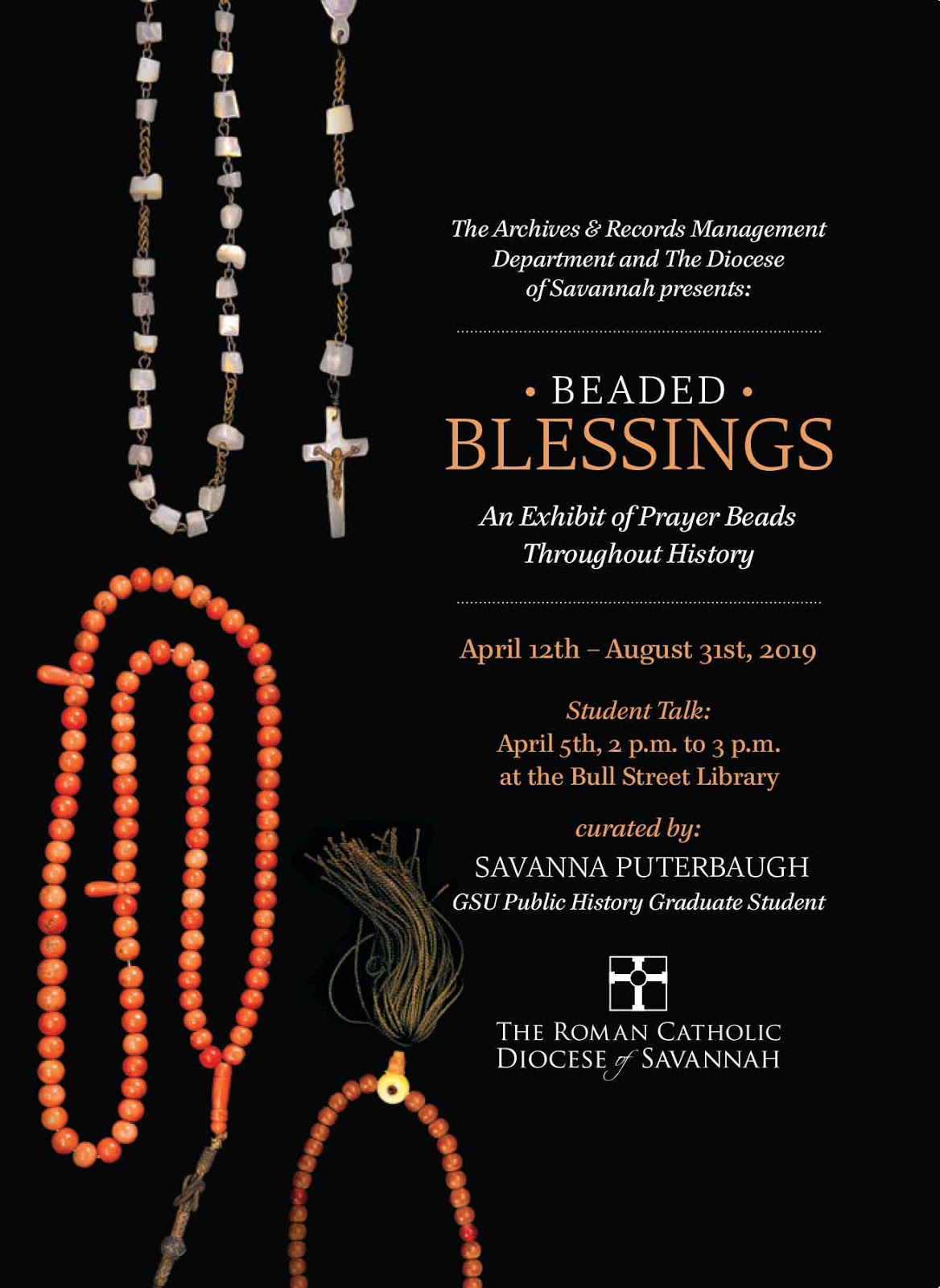
The Diocese of Savannah Archives & Records Management Office is excited to announce our upcoming exhibit Beaded Blessings: Prayer Beads Throughout History.

A preview of the exhibit will be held on Friday April 5th with a presentation by Georgia Southern University Public History Student and exhibit curator Savanna Puterbaugh. The talk will begin at 2 pm at the Bull Street Library (2002 Bull Street, Savannah), Live Oak Public Libraries.

Beaded Blessings: Prayer Beads Throughout History will open to the public on Friday April 12th at the Archives & Records Management Office of the Catholic Diocese of Savannah (2170 East Victory Drive). Please let the front desk know you are here for the exhibit and someone will show you up to the 3rd floor.

The exhibit will be open on Mondays and Friday during our public hours of 9 am to 12 noon between Friday April 12th and Friday August 30th.  Exhibit closure will coincide with building closures of Monday May 27th and Thursday July 4th.

We look forward to seeing you there! Continue to follow us on our website (diosav.org/archives), Facebook (DioSav Archives & Records Office) and on Twitter (@DioSavArchives) for announcements, news, events, #KnowDioSavHistory and #RoaminCatholicArchivist.


Maps, Surveys, And Plans, Oh My!

The City of Savannah Municipal Archives preserves over 4,000 historical maps, surveys, and plats from the City Surveyor’s and City Engineer’s offices, dating back to the 1790s.  These collections document Savannah’s unique town plan, progress and growth through the 19th and 20th centuries, and development of distinct neighborhoods and subdivisions.  Additionally, the Archives’ collections include architectural plans and drawings for facilities built by the City, including prominent landmarks such as City Hall, Police and Fire stations, the old Municipal Auditorium, and Grayson Stadium. 
Join Municipal Archives staff for a special session to learn about these collections, how you can access them both in person and through the internet, and participate in a special hands-on show-and-tell highlighting the wide range of engineering and survey materials available.  We’ll also share a few special stories of murder and mystery involving former City Surveyors and Engineers from our past that are sure to capture your interest!
The event will include a tour of Savannah’s historic City Hall and a behind-the-scenes look at our collection storage and reference spaces.
Where: City of Savannah Municipal Archives, Savannah City Hall, 2 E. Bay Street, Savannah GA, 31401. We will follow up closer to the event with directions and parking information.
When: Friday, June 14th, 10:30 am – 12:30 pm. Information to follow on a suggested lunch meet-up spot.
Registration: Registration is limited to 35 participants. Please RSVP to KZacovic@savannahga.gov or (912)-651-4212 by Monday June 10th. Guests are welcome!

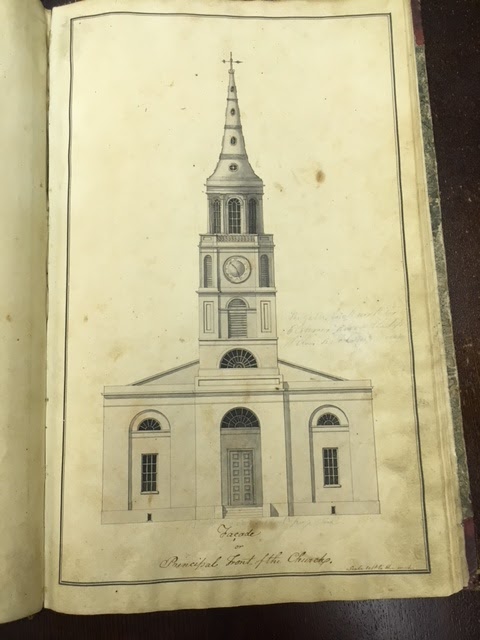
Historic Architectural Sketches of Augusta First Presbyterian Church now available digitally

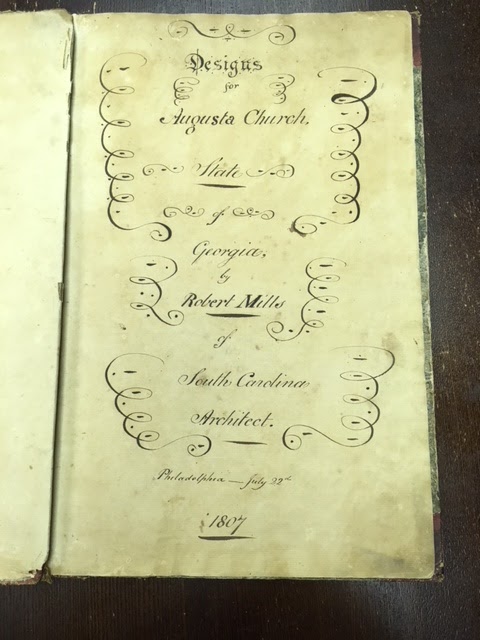
The Georgia Heritage Room of the Augusta-Richmond County Public Library System is pleased to announce the availability of Designs for Augusta Church, State of Georgia by Robert Mills of South Carolina, Architect, Philadelphia, 22 July 1807 at https://dlg.usg.edu/collection/fpcag_rmfpc.
The collection consists of an architectural record book belonging to First Presbyterian Church of Augusta, Georgia, and created by nationally renowned architect Robert Mills in July 1807. Mills executed the three-part record at the behest of the building committee, and in it details plans for the design of the future church. Support for this project provided by the Augusta-Richmond County Public Library System and Georgia HomePLACE, a unit of the Georgia Public Library Service.
Tina Monaco of the Georgia Heritage Room notes: “Augusta-Richmond County Public Library System is honored to have assisted First Presbyterian Church of Augusta with the digital preservation of Robert Mills’ manuscript of architectural designs, particularly as it contributes to the early history of the Church as well as Augusta. More broadly, the plans are an excellent example of Mills’ early portfolio, complementing an already vast body of work that defined him as a key architect of the Early Republic.”
Pages from Mills’s church design record book


About Robert Mills

Robert Mills is known, among his many projects, for the design of the Washington Monument. A prolific architect and engineer, Mills began his studies in Charleston, but as a young man moved to Philadelphia, and apprenticed under James Hoban, designer of the White House, a project to which Mills contributed. He also studied under famed architect and engineer of the period, Benjamin Henry Latrobe, and fell under the tutelage of Thomas Jefferson who designed and built Monticello, his home in Charlottesville, Virginia. Throughout his life, Robert Mills designed numerous buildings throughout the Mid-Atlantic, including official appointments by President Andrew Jackson in 1836 to design office complexes for the U.S. Treasury and the Patent Office. Mills was also an accomplished author, having published Mills’ Atlas of South Carolina in 1825.
Design for First Presbyterian Church in Augusta, Georgia (1807) was accomplished early in his career, during a time when he received commissions to build other churches, notably the Circular Congregational Church in Charleston, South Carolina. Classical Revival architecture predominated during the mid-eighteenth century onward, heavily influencing Mills and his contemporaries. This style is reflected in his plans for First Presbyterian Church. Though the building has undergone significant remodels over the years, it retains its original classical form.

Call For Proposals: Society of Georgia Archivists 2019 Annual Meeting

The Society of Georgia Archivists Annual Meeting Program Committee proudly presents the theme for the 2019 conference: Strong Roots, Stronger Branches: SGA at 50.
The Committee invites you to attend the meeting, to be held at the Augusta Marriott at the Convention Center in Augusta, Georgia, October 16-18, 2019.


With SGA celebrating its 50th anniversary, this year’s program reflects on the profession’s roots in diverse settings, constituencies, and institutions, while exploring its growth as it branches out with new technologies and innovation. Presentations will examine how archivists can further strengthen their collections, programs, and services using both established practices and creative methods.  
For the 2019 annual meeting, the Program Committee seeks presentation and poster proposals that improve our understanding of the following key topics as we grow into SGA’s next 50 years:
  • Collection development and management with limited staff and resources;
  • Traditional processes applied to the contemporary information landscape;
  • Conservation and preservation of analog and digital collections;
  • Broadening access and increasing inclusion in services and collections;
  • Emerging platforms, tools, and media types;
  • Future-focused archival education and training
Traditional panel sessions are welcome, but the Program Committee is also seeking proposals for hands-on, interactive, or discussion-based sessions. We encourage potential presenters to review the SGA Statement on Diversity and Inclusion and consider how their proposed session content will serve and support a wide variety of institution types, professional roles and backgrounds, and user communities.  

We invite you to share your work as part of a vibrant, diverse, and growing archival community as we celebrate SGA’s golden anniversary. Please join us for Strong Roots, Stronger Branches: SGA at 50.

To submit a proposal, please use the form found here. Deadline for proposals is April 30, 2019.

Profile: Susie LaBord (1911-1991) a.k.a. Mama LaBord, Great Lady of Grady Homes

By Meredith Torre, Archivist, Atlanta Housing Authority

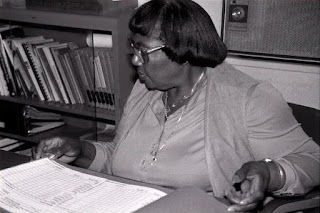
Born in Alabama May 29, 1911 as one of 14 children to a sharecropper, Susie LaBord was appointed the first public housing resident in Atlanta to serve as a voting Atlanta Housing Commissioner member by Mayor Sam Massell in the 1970s. She received national recognition as an unflagging and determined spokesperson for the rights and needs of disadvantaged Americans.

Photograph 2014.05292. Susie
LaBord, circa 1985.

LaBord fought alongside people to help them break out of what she called the “poverty cycle,” affirming that it was through programs of community action that, “poor people of all races get a chance to stand on their own feet, learn, earn, and carry their share of the load.” Although Rev. Leon Harris described Susie LaBord as, “sweet, soft spoken, and sophisticated,” he equally described her as “radiant and reaching out; a leader, lady wearing many hats” and “eager to do for others.” 

Mrs. LaBord’s personal motto, “keep on keeping on” started in her community work back in 1933 during the time she and her husband Gus operated the Fourth Street Rib Shack at Fourth and Cain Streets. They held a collection from Atlanta businesses in the Fourth Ward to distribute among the community’s poor.


In 1951, when her husband was stricken with cancer, LaBord moved to Grady Homes and continued to dedicate her life to helping others following his death. Affectionately known to many Atlantans as “Mama LaBord,” AH Vice-President Jack F. Glenn, in a 1976 Board resolution wrote that her advice and counsel was “sought by political, religious, and business leaders as well as by ordinary people, young and old.” She served as president of the Grady Homes Tenants Association for over 25 years and director and organizer of the Susie LaBord Day Care Center for over 28 years.

Each year LaBord passed out nearly 825 bags of fruit, sweets, and nuts at Christmas time that she and volunteers from Atlanta Housing staff helped to assemble for the children and elderly of Grady Homes. Mrs. LaBord received national attention in her support of programs aimed at low income families, rights of the poor, and her advocacy of federal legislation for community action programs.

She prevailed relentlessly upon President Richard Nixon for drug and nutrition programs. She corresponded with President Lyndon B. Johnson, often reaching the President on the telephone when many Senators could not do so, and once barged into the Oval Office to make sure President Johnson did not cut the city’s Equal Opportunity funds.

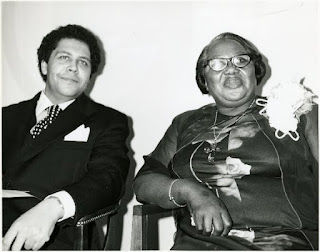
Photograph 2013.01079. Atlanta Mayor Maynard H. Jackson
and Mrs. Susie LaBord, first resident commissioner of Atlanta Housing.


She was received by President Jimmy Carter in celebration of the anniversary of the Head Start Program. Throughout the 1970s, she made several trips to Washington and St. Louis to speak to the public in the fight to maintain high levels of public housing.


At the age of 80, when LaBord passed away, the Atlanta Journal Constitution hailed her as the Great Lady of Grady Homes. “The Housing Authority was her family, her life,” Bettye Davis, then Director of resident housing for Atlanta Housing stated, and Mrs. LaBord was “a most effective fighter for the rights of public housing residents.”

Learn more about Susie LaBord in her collection at the Atlanta Housing Authority, and in the AHA’s Grady Homes and Veranda at Auburn Pointe Records.

Untraditional Archives Jobs: Corporate Digital Asset Management


Did you know that corporate businesses need archivists and librarians? Marketing and brand assets need organization, too! There is a growing appetite for information science surrounding a business’s use of their own marketing materials, which is exactly where an archivist or librarian can make a big impact. Whether you are describing and making available historical artifacts, scholarly articles, or a global brand’s logo—the skills are the same! The focus on accurate, quality ensured data remains, as does the accomplishment of solving a tough reference request
Digital asset management (DAM) is the process through which rich media files are stored, organized, and reused. Businesses are creating digital ecosystems that require a DAM system as a foundation to ensure their collateral is on brand and increasingly automated.  The launch and maintenance of these systems are large endeavors that present great opportunities for digital librarians.
Most businesses require more than just the migration of files into their new DAM. Usually their systems need taxonomy improvements to help people find the files that exist. It’s difficult to fully leverage your marketing assets if they have been tagged with terms that the users do not understand! A digital librarian can make sure their DAM has an intuitive set of metadata fields and tags that flexes as the business grows or changes.
Businesses don’t always realize that they are looking specifically for a digital librarian to organize their content. DAM is often outsourced to agencies with expertise rather than managed internally, due to the specialized nature of the asset management work. 
ICP is one such agency that fills this niche, with its U.S. business headquartered in Atlanta.  A typical project at ICP begins with a large asset migration—moving marketing files from existing siloed systems and individual hard drives into one ‘single source of truth.’ The cross-mapping of metadata from disparate systems and creation of metadata when it doesn’t exist is where an information science skillset is vital. 
In the field of DAM, there will always be a need for digital archivists and librarians to create and quality control the critical metadata that enables asset reuse and increases business efficiency.   
To learn more about the DAM industry and open roles at ICP, please reach out to casey.smith@icpnet.com.