Digitization Grant Opportunity from the Watson Brown Foundation

The Watson Brown Foundation, based in Thomson, GA, is soliciting applications for grants that support the preservation of Southern history. They are especially interested in funding the digitization of historical materials. Applications are due April 15. More information and contact info for inquiries can be found on their website: https://www.watson-brown.org/grants/guidelines/

Call for Applicants: Associate Editor for the Case Studies on Teaching With Primary Sources series

Call for Applicants
The Teaching with Primary Sources sub-committee of the Reference, Access and Outreach Section of the Society of American Archivists is accepting applications for the role of Associate Editor for the Case Studies on Teaching With Primary Sources series. For more information about the series, visit https://www2.archivists.org/publications/epubs/Case-Studies-Teaching-With-Primary-Sources
The Associate Editor works with the Editor to maintain the Teaching with Primary Sources Case Studies as a contribution to the professional scholarship and illustration of the application of the Guidelines for Primary Source Literacy. The position, in collaboration with the Editor, coordinates the review process and works with peer reviewers. The Associate Editor role shall become the Editor when their term expires, requiring a two-year commitment.  
DUTIES 
·       In consultation with the Editor, identify potential authors and solicit proposals
·       Assist in coordinating the peer review process, working with peer reviewers to provide timely feedback
·       As directed by the Editor, communicate reviews and feedback to authors
·       Promote recently published case studies to the RAO membership and broader community of practitioners
Applications will be accepted to twps-casestudies@archivists.org until February 1, 2020. Applicants should submit a statement of interest explaining their experience editing; a writing sample; and a resume/CV. Questions may be addressed to Jen Hoyer at twps-casestudies@archivists.org.

2020 Atlanta Studies Symposium Call for Proposals

Call for Proposals for the Atlanta Studies Symposium

Each spring the Atlanta Studies Network hosts an annual symposium that tackles the social, cultural, environmental, and economic issues facing Atlanta. In keeping with our belief that scholarship about the city should also be for the city, the symposium is always free to attend and open to the public.
Our eighth annual Atlanta Studies Symposium will be held at the Robert W. Woodruff Library of the Atlanta University Center on Thursday, April 23, 2020.


The eighth annual Atlanta Studies Symposium welcomes proposals on any aspect of Atlanta, past, present, or future. Priority will be given to those that directly relate to the conference theme, “Inclusive Innovation: Designing the Future of Atlanta.”
In June 2020, the city of Atlanta will host the inaugural U.S. edition of the global Smart City Expo, the world’s leading conference and expo on smart cities and smart urban solutions. City officials involved in this endeavor boast of their ability to “redefine what it means to be a smart city” while Atlanta researchers, city planners, and activists develop and investigate emerging technologies options to improve urban transportation in the City of Atlanta and the metro region. As the city hones in on its Smart City efforts, how will art and design be utilized alongside technology to enhance its infrastructure and address issues of equity? With the metro region’s ever-growing population and increased awareness of its need for new innovative methods of development, it is important for these methods to be inclusive and diverse to envision a more sustainable and equitable city and region. This symposium seeks to explore the points of intersection and division within Atlanta’s economic development, population growth and increased creative potential.  
This symposium poses the questions: 
  • How does economic development affect art and design in Atlanta?
  • How does art and design impact the lived environment of the city?
  • How can city design address structural oppression and economic disparity?
  • What are the ways art and design intersect with or address issues of equity in Atlanta?
  • What role does art, literature, and music, play in imagining alternative realities and radical futures for the city?
  • How is Atlanta redefining what it means to be a Smart city?
  • How is creative capital measured and cultivated within the city?
  • Who is designing the future of the city? Who is included in this future?
This year, we seek a diverse array of symposium sessions from scholars and practitioners at academic institutions, as well as from other public, private, and nonprofit organizations. We welcome proposals for:
  • Fully constituted panels with up to 3 presenters and a moderator
  • Individual papers or posters
  • 5 minute/5 slide presentations that will be part of a lightning round session
  • Roundtable discussions
  • Interactive workshops
  • Film screenings
  • Any other creative form of presentation you’d like to propose
Please submit abstracts via this Google form no later than February 12, 2020. Notifications will be sent out by March 13, 2020.
If you have questions about the event or proposals, please contact atlantastudiessymposium@gmail.com.

For more information visit: https://www.atlantastudies.org/symposia/

Confederate naval ledger now freely available online

WRITER: Mandy Mastrovita, mastrovi@uga.edu, 706-542-0587
CONTACT: Sheila McAlister, mcalists@uga.edu, 706-542-5418
ATHENS, Ga. — A Civil War-era ledger belonging to James H. Warner, commander and superintendent of the Confederate States Naval Iron Works (sometimes referred to as the Columbus Iron Works) is now available through the Digital Library of Georgia at dlg.usg.edu/collection/ncwnm_jhwl.
James H. Warner received a commission in the United States Navy in 1851 as a third assistant engineer. He became a chief engineer in 1856. Warner later served the Confederacy, where he received his assignment in Columbus, Georgia in 1862. As a naval engineer, he consulted for a number of projects throughout the South and was instrumental in the construction of the CSS Jackson, built in Columbus.
The Confederate States Naval Iron Works operated from 1862-1865. The ledger also includes entries as late as 1866 as Warner worked with the United States Navy in turning over naval equipment to the United States government. Records surviving the Civil War that document the Confederate Navy is limited. This ledger provides information about Columbus, Georgia, ironclad construction, steam engines, and the daily operation and industrial reach of the Confederate States Naval Iron Works.
Robert Holcombe, former director and historian of the Confederate Naval Museum describes the significance of the ledger:
“Not only has this ledger been a great resource for those studying steam engines, ship construction, etc. from the Civil War period, it is largely an untapped resource for those studying Columbus and the Chattahoochee River Valley. Making this ledger known and available for a wider audience will benefit Columbus, as well as making this important source more readily accessible for Civil War naval research.”
About the National Civil War Naval Museum
The National Civil War Naval Museum houses the largest surviving Confederate warship, the CSS Jackson, as well as the wreckage of the CSS Chattahoochee, and the largest collection of Civil War Naval-related flags on display in the country. Their timeline exhibit shows naval events and features many of the museum’s most rare artifacts, such as the uniform coat of Captain Catesby Jones and Admiral Farragut’s two-star hat insignia. The museum hosts a range of events throughout the year with an emphasis on museum theatre and historic character interpretation. Additionally, there are living history events, tours, cannon firings, weapons demonstrations, local history projects and more. Visit portcolumbus.org.
About the Digital Library of Georgia

Based at the University of Georgia Libraries, the Digital Library of Georgia is a GALILEO initiative that collaborates with Georgia’s libraries, archives, museums and other institutions of education and culture to provide access to key information resources on Georgia history, culture, and life. This primary mission is accomplished through the ongoing development, maintenance, and preservation of digital collections and online digital library resources. DLG also serves as Georgia’s service hub for the Digital Public Library of America and as the home of the Georgia Newspaper Project, the state’s historic newspaper microfilming project. Visit the DLG at dlg.usg.edu.

Call for Proposals – 2020 Georgia Archives Symposium

From Field to Mill Town: Cotton and Textile Culture in Georgia

April 4, 2020
5800 Jonesboro Road
Morrow, GA 30260
                                                
The Georgia Archives invites proposals for presentations and posters for our 2020 symposium looking at textile culture in Georgia.  We welcome proposals on a variety of topics, including but not limited to: mill towns, cotton farming, and the International Cotton Exposition of 1881. Use of Georgia Archives records is encouraged but not required.
The Symposium will include five 50 minute sessions, plus a lunch session featuring student posters. One of the 50 minute sessions may consist of three 10 to 15 minute presentations. We invite proposals for (a) 50 minute presentations, (b) individual 10 to 15 minute presentations, (c) panels of three 10 to 15 minute presentations, and (d) student posters. We seek a variety of presenters and encourage students, historians and historical researchers, and anyone with an interest in textile culture or related disciplines to submit proposals.
We are pleased to announce that we are able to print posters for chosen poster proposals. 
We are able to provide small grants to graduate students to assist in travel to Morrow to present at the presentation.  If you would like to be considered for this funding, please indicate this on your proposal. 
Suggested Georgia Archives Records:
For more information on these records, please contact Caroline Crowell: caroline.crowell@usg.edu
          Agriculture department Bulletins, Circulars, and Press Bulletins (record group 13/3/7)
          Georgia Commodity Commissions Files (record group 13/9/14)
          Assorted private manuscript collections covering production, sale, and transport of cotton and other textiles (search our book and manuscript catalog and limit “location” to “Manuscripts.”
Guidelines for Submission:
Proposals must include a proposed title, presentation category (50 minute, 10 to 15 minute, panel, or student poster), brief summary of the presentation (100-200 words), brief biography of the presenter (<100 words), and any technological requirements beyond a laptop, projector, and internet access. Please email proposals to Caroline Crowell at Caroline.Crowell@usg.edu by December 14, 2019.
Important Dates:
Deadline for submission:  December 14, 2019
Notification of acceptance:  January 18, 2020
Deadline for final submission – posters:  March 23, 2020
Deadline for final submission – presentations: March 30, 2020
Program Committee: Caroline Crowell, Hendry Miller, Amanda Mros
Questions?

If you have further questions, please contact Hendry Miller at Hendry.Miller@usg.edu .

54th Georgia Archives Institute: June 7-18, 2020 at the Georgia Archives

Designed for beginning archivists, manuscript curators, and librarians or those whose positions have expanded to include the management and care of their organization’s archives or manuscript/history collection, the Georgia Archives Institute provides general instruction in core concepts and practices of archival administration and the management of traditional and modern documentary materials.  Recipient of the 2016 Society of American Archivists’ Distinguished Service Award, the Institute is a two-week program held at the Georgia Archives in Morrow, Georgia, near metro Atlanta, which includes six days of classroom instruction and a three-day internship. 

Instructional topics include appraisal, accessioning, arrangement and description, reference and outreach, security, copyright, born-digital records; as well as a whole day on the preservation and care of archival materials.  To link archival theory with real-world application, students will also participate in individualized, three-day internships at local archival repositories.  The internship provides an opportunity for students to observe the operations of an archival facility combined with hands-on experience processing archival collections.

Pam Hackbart-Dean is the Head of Special Collections & University Archives at the University of Illinois at Chicago. She has worked at Special Collections Research Center at Southern Illinois University Carbondale, Special Collections & Archives at Georgia State University and for the Richard B. Russell Library for Political Research and Study at the University of GeorgiaShe has conducted a number of workshops on arrangement and description, as well as published articles and books on the subject. The Preservation of Archival Materials day-long session will be taught by Tina Seetoo, Preservation Manager at Delta Flight Museum.  

Tuition is $500 and enrollment is limited to 20 students.  Deadline is midnight on March 15, 2020 for receipt of application and $75 application fee (which is refunded if not admitted to the Institute).  Tuition scholarships are available from the Society of Georgia Archivists (SGA) (http://www.soga.org/scholarships/hart) and the Friends of Georgia Archives and History (http://fogah.org/programs/dunaway-scholarship/).  Successful applicants, who are not members of the Society of Georgia Archivists, will receive a free membership for one year.


For an application to the Institute, detailed schedule and additional information, please visit our website at www.georgiaarchivesinstitute.org or contact us at georgiaarchivesinstitute@gmail.com.
x

Columbus State University Archives Open House

You’re invited to an open house at the newly renovated Columbus State University Archives!

When: Tuesday, November 19, 2019
Doors open at 5:00 p.m. and welcoming remarks begin at 6:00 p.m.

Where: Simon Schwob Memorial Library, ground floor (4225 University Ave., Columbus, GA 31907)

One key element of the Schwob Library renovation project involves the CSU Archives. The Archives will move to the ground floor of the library allowing for a number of transformative changes. A new reading room will help archival staff better meet the needs of researchers, including students, local community members, and visiting scholars. A new multipurpose room will expand archival operations in areas of classroom instruction and outreach, accommodating large class groups needing assistance in conducting archival research and hosting programs for the community such as workshops on preserving family history. Most important, however, is the new collections storage vault. New environmental controls will ensure the preservation of the Archives’ priceless collections that include material dating back to the 1590s.

The Columbus State University Archives, established in 1975, serves as a repository for historical and cultural materials documenting Columbus State University, the city of Columbus, and the surrounding Chattahoochee Valley area. Today the Archives contains over 5,000 cubic feet of material in nearly 500 distinct collections. These collections serve a wide range of visitors including university students, faculty, and staff as well as local community members. Scholars from around the world also conduct research in the CSU Archives with recent international researchers from Japan, Singapore, France, Belgium, and Germany. Some of the topics researchers are interested in include the textile mill industry, Creek Indian removal, local author Carson McCullers, the Civil War, the Chattahoochee River, Fort Benning, and local family history and genealogy. 

Congratulations to New SGA Fellow Sheila McAlister

The Society of Georgia Archivists Fellows Award recognizes outstanding contributions to archives and archivists in Georgia. To read more about the SGA Fellows Award go here
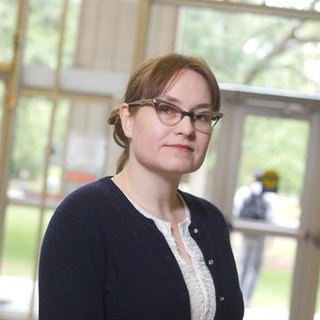
Sheila McAlister serves as the Director of the Digital Library of Georgia. She has been an active member of SGA for 21 years. In the words of her nominator, Sheila’s “impact on the Georgia archival community is exhibited in her efforts to build archival capacity among smaller, less resourced institutions in the state. She regularly consults with institutions at no cost to them to help develop and maintain their physical and digital collections.Throughout her career, Ms. McAlister has remained committed to helping develop sustainable archival efforts by working to provide access to services, resources, and training to Georgia cultural heritage organizations. Her dedication to fostering sustainable archival activities in under-resourced institutions and her positive representation of the association on the national scale, are excellent examples of work worthy of a fellowship.” 
Again, congratulations to Sheila for her hard work and dedication to the archival community.

SGA’s President’s Award Presented to Dr. Catherine Oglesby


President’s Award, Dr. Catherine Oglesby
Nominated and text written by Colleague Deborah S. Davis, Director, Professor, Valdosta State University Archives and Special Collections


On behalf of the Society of Georgia Archivists Board, it is my great honor to recognize Dr. Catherine Oglesby, recipient of the 2019 President’s Award as we celebrate fifty years of combining social connection with our social responsibility to preserve the past and the present for the future.

The SGA President’s Award recognizes individuals or organizations from outside the archival profession who make significant contributions to it. These supporters — be they legislators or administrators or researchers or others — are absolutely vital to the archives field and individual archivists. Advocates from other communities, with different perspectives, illuminate our relevance to the wider world and encourage us to question our status quo. 

 Dr. Oglesby is a recently retired professor of history at Valdosta State University. Through her teaching there she created a lot of synergy between history and the Valdosta State University Archives and Special Collections. In the early 2000’s Oglesby came up with an idea to do extra credit assignments for her entry level history students. The Volunteer Extra Credit program continued unceasingly since 2004 with other history professors participating as well. Over the years processing 200 boxes of presidential papers, created extensive databases for indexes of our local paper, our college newspaper, and 42 years of news scrapbooks. Over 600 students have participated in the volunteer program. 
Dr. Oglesby has also been instrumental in bringing valuable collections to the archives. She worked to acquire and process the extensive Leona Strickland Hudson collection, She researched the collection and wrote the biography and an extensive timeline of the family from 1870 to 2008. In order to process the collection, Catherine approached the executor of the estate and we received a $25,000 grant to pay for the work. She also donated other important collections for the archives: the Catherine Oglesby Civil Rights Collection– and the Southern Patriot Newspaper: Valdosta State has been actively collecting in African American history and Civil Rights history and Catherine’s gifts got them started. 
It’s rare that a friend of the archives comes along who has shaped teaching and collecting as much as Dr. Oglesby. We are very much richer for her passion for working with archives. According to the description of the award, you are looking for people who are “absolutely vital to the archives field and individual archivists.” Dr. Catherine Oglesby has been a stellar example of that for the Valdosta State University Archives and Special Collections.

Medical ledger documenting 19th century Athens freedmen now freely available in the Digital Library of Georgia

CONTACT: Deborah Hakes, dhakes@georgialibraries.org

ATLANTA — A Reconstruction-era medical ledger detailing the names of hundreds of African American freedmen has been digitized and made freely available online through the Digital Library of Georgia. The project is a partnership between Georgia HomePLACE, the digitization unit of the Georgia Public Library Service; and the Athens-Clarke County Library, headquarters of the Athens Regional Library System.

The medical ledger, created by Dr. Joseph Barnett Carlton (1822-1881), is an excellent resource for researchers and genealogists seeking to identify and locate African Americans following the end of the U.S. Civil War. A leather-bound volume of hand-lettered pages, the ledger contains the names, diagnoses, and medications sold to freed African Americans by the physician. Entries are dated 1867-1872 and provide the first and last names of patients along with the date of treatment. 
“This ledger is an incredible piece of history,” said Athens Regional Library System Executive Director Valerie Bell. “It offers us a rare glimpse into the lives of African American Athenians in the years immediately following the Civil War and Emancipation, which is valuable both to family history researchers and students of history and medicine. We are so pleased to partner with HomePLACE to make this treasure more accessible for everyone.”
Included in many entries are the illness for which the patient was treated and the cost for the treatment and any medicine. Payments made towards the bill are documented along with the dates of the payments and the date when the account is paid in full. One interesting entry shows that Dr. Carlton treated a young patient on Christmas day in 1872.

Dr. Carlton was a physician for 35 years. He served as surgeon of the Toombs Regiment, C.S.A., and was a graduate of the University of Georgia and the Medical College in Augusta. Dr. Carlton also served in the Georgia House and Senate.

“The Carlton ledger of Freedmen is an expressly cherished piece in our collection at the Athens-Clarke County Library,” says Ashley Shull, archives and special collections coordinator of the Athens Regional Library System. “This item will connect the family histories for many people within our community.”  

###
Georgia HomePLACE encourages public libraries and related institutions across the state to participate in the Digital Library of Georgia. HomePLACE offers a highly collaborative model for digitizing primary source collections related to local history and genealogy. HomePLACE is a project of the Georgia Public Library Service, a unit of the Board of Regents of the University System of Georgia. HomePLACE is supported with federal Library Services and Technology Act funds administered by the Institute of Museum and Library Services through the Georgia Public Library Service. Visit www.georgialibraries.org

Athens Regional Library System serves the residents of Athens-Clarke, Franklin, Madison, Oconee and Oglethorpe counties with 11 library branches. The system offers an extensive collection of resources and provides access to evolving technology in addition to programs and events for children, teens and adults. Headquartered at the Athens-Clarke County Library, the Athens Regional Library System was named Georgia’s Public Library of the Year in 2017. Learn more at www.athenslibrary.org